Tuesday, May 20, 2025

28.7 老爸派人teh 揣我

28.7 Lāu-pē phài lâng teh chhōe góa

"... Jiân-āu, thiaⁿ-kóng Don Fernando sûi lī-khui, Luscinda un kàu keh-kang chiah ho̍k-goân, chiah kā pē-bú kóng-bêng sī án-chóaⁿ yi chin-chiàⁿ sī góa tú-chiah kóng-kòe hit-ê Cardenio ê sin-niû. Góa mā thiaⁿ-kóng, ū hong-siaⁿ kóng, Cardenio mā ū chhut-hiān tī tēng-hun lé, khòaⁿ tio̍h Luscinda ê tēng-hun kap i ê kî-bōng tian-tò, i tō lī-khui hit-ê siâⁿ-chhī, lâu chi̍t-tiuⁿ phe kóng Luscinda tùi i só͘ chò ê m̄-sī, í-ki̍p i boeh khì chi̍t-ê bô lâng ē koh khòaⁿ-tio̍h i ê só͘-chāi. It-chhè chiah-ê pháiⁿ miâ-siaⁿ thoân tī siâⁿ-lāi, ta̍k-ê lóng teh kóng che. Iû-kî sī, thiaⁿ-kóng Luscinda mā ùi lāu-pē ê chhù siau-sit, mā bô tī siâⁿ-lāi, sì-kè chhōe bô yi, hō͘ pē-bú chiok hoân-ló, m̄-chai ū siáⁿ hoat-tō͘ chhōe yi tńg-lâi.

"Thiaⁿ-tio̍h che, hō͘ góa koh seⁿ hi-bāng, bô chhōe tio̍h Don Fernando, tian-tò hō͘ góa khah hoaⁿ-hí kòe chhōe tio̍h í-keng kiat-hun ê i, in-ūi chāi góa khòaⁿ, góa ê ki-hōe ê mn̂g iáu-bōe koaiⁿ. Góa siūⁿ, hoān-sè sī Thiⁿ tī tē-jī pái hun-in siat chit-ê chiòng-gāi, hō͘ i sêng-jīn tio̍h chīn tē-it pái ê gī-bū, koh hoán-séng, chò chi̍t-ê Kitok-tô͘, tio̍h khòaⁿ ka-tī ê lêng-hûn khah tāng kòe sè-kan mi̍h-kiāⁿ. It-chhè chiah-ê siám-kòe góa ê náu-hái, góa chīn-la̍t an-ùi ka-tī, tān bô tit-tio̍h an-ùi, góa tîm-chùi tī hi-bî, iâu-oán ê hi-bāng, chhì boeh pó-sioh taⁿ góa ià-siān ê seng-oa̍h.

"M̄-koh, tī siâⁿ-lāi bô chhōe tio̍h Don Fernando, m̄-chai boeh chhòng-siáⁿ hó ê sî, góa thiaⁿ-tio̍h kóng, ū kò-sī kóng, chhōe-tio̍h góa ê lâng ū tāng-siúⁿ, koh thê-kiong góa ê nî-hòe, ho̍k-chong ê sè-chiat. Góa thiaⁿ lâng kóng, sī hō͘ pôe góa lâi hit-ê po̍k-jîn kā góa ùi goán pē-bú ê chhù koái-cháu ê. Che hō͘ góa sim ná teh koah, hián-sī góa ê miâ-siaⁿ í-keng lak kàu gōa kē. Góa lī-ka í-keng miâ-siaⁿ bái, in koh kóng góa sī tòe lâng cháu, tòe chi̍t-ê hiah pi-chiān, hiah bô sù-phòe ê lâng.

"Chi̍it-ē thiaⁿ-tio̍h chit-ê siau-sit, góa tō kap po̍k-jîn chhut-siâⁿ. Hit-lâng tùi góa ê tiong-sêng tī chit-sî chhut-hiān iô-tāng. Hit-àm, in-ūi kiaⁿ hông hoat-hiān, góa bih-ji̍p soaⁿ-khu siōng ba̍t ê chhiū-nâ. M̄-koh, tō ná sio̍k-gí kóng ê, pháiⁿ-sū sio-tòe, chi̍t-ê put-hēng ê kiat-sok éng-éng sī pa̍t-ê khah tōa put-hēng ê khai-sí. Góa ê chōng-hóng tō sī án-ne. Goân-pún tùi góa tiong-si̍t khó-khò ê hó po̍k-jîn, hoat-hiān góa tī chit-chióng ko͘-toaⁿ só͘-chāi, soah sim-koaⁿ khí siâ-liām, khah bô sêng sī in-ūi góa ê bí-māu. I ài-boeh lī-iōng che ko͘-choa̍t ê khoân-kéng, bē-hiáu kiàn-siàu, m̄-kiaⁿ sîn-bêng, bô chun-kèng góa, khai-sí hiòng góa kiû-ài. Jiân-āu, hoat-hiān góa kō͘ giâm-lē ê ōe-gí hôe-choa̍t i he kāu bīn-phôe ê iau-kiû, i hòng-khì khí-chho͘ ê khún-kiû, kái iōng po̍k-le̍k.

"Ka-chài, Thiⁿ-kong ū ba̍k-chiu, chóng-sī pang-chō͘ siān-liông. Ū Thiⁿ ê pang-chō͘, kō͘ góa sió-sió le̍k-liōng, sió-khóa chhut-la̍t, góa kā i tháⁿ-lo̍h toān-gâi, lâu i tī hia, m̄-chai seⁿ a̍h sí. Sim-koaⁿ kiaⁿ-hiâⁿ, lâng koh thiám, góa piàⁿ-miā cháu hiòng soaⁿ-lāi, siáⁿ to bô siūⁿ, ûi-it bo̍k-tek sī boeh bih tī soaⁿ-lāi, siám-phiah goán lāu-pē kap i phài lâi chhōe góa ê lâng.

"Góa m̄-chai, chū-chiông phō chit-ê bo̍k-tek lâi kàu chia í-keng kòe kúi-kò goe̍h ah. Góa tú-tio̍h chi̍t-ê khòaⁿ-iûⁿ-á, i chhiàⁿ góa tī soaⁿ-khu bó͘ chi̍t só͘-chāi chò po̍k-jîn. Góa it-ti̍t tī chia kò͘ iûⁿ-á, chīn-liōng bih tī iá-gōa, koh kā thâu-chang chhàng hó, taⁿ soah ì-gōa po̍k-lō͘ chhut-lâi.

 "M̄-koh, góa ê sió-sim kap chia̍h-khó͘ mā sit-hāu. Goán chú-lâng hoat-kak góa m̄-sī cha-po͘ ê, tō sán-seng kap góa hit-ê po̍k-jîn kāng-khoán ê siâ-liām. Iū-koh, hó-ūn bô chóng-sī tī khùn-lân ê sî thê-kiong kiù-chō͘, góa bô sûi-sî ū toān-gâi a̍h soaⁿ-khàm, chhiūⁿ tī góa ê po̍k-jîn ê chōng-hóng án-ne, thang-hó kā chú-lâng chhia-lo̍h a̍h siau-tî i ê kek-chêng. Góa siūⁿ khah kî-chhù ê hoat-tō͘, tō sī lī-khui i, kā ka-tī chhàng tī chhim soaⁿ, bián-tit kap i pí khùi-la̍t a̍h pôaⁿ chhùi-gím. 

"Só͘-tì, tō ná góa kóng ê án-ne, góa koh chhōe só͘-chāi bih khí-lâi, hō͘ góa ē-tit tī hia thó͘ tōa-khùi, lâu ba̍k-sái, kiû Thiⁿ khó-liân góa ê put-hēng, hō͘ góa pang-chō͘ kap le̍k-liōng lâi thoat-lī khó͘-lān, nā bô, tō hō͘ góa sí tī chit-ê ko͘-choa̍t ê só͘-chāi, mài lâu jīm-hô hûn-jiah hông chai he sī góa. In-ūi góa ê put-hēng m̄-sī góa ê kòe-chhò, soah chiâⁿ-chò chāi-tē kap gōa-tē lâng gī-lūn ê kiàn-siàu-tāi...

(2024-6-16)

--

28.7 老爸派人teh 揣我

"... 然後, 聽講 Don Fernando 隨離開, Luscinda un 到隔工才復原, 才 kā 爸母講明是按怎她真正是我拄才講過彼个 Cardenio ê 新娘. 我 mā 聽講, 有風聲講, Cardenio mā 有出現 tī 訂婚禮, 看著 Luscinda ê 訂婚 kap 伊 ê 期望顛倒, 伊 tō 離開彼个城市, 留一張批講 Luscinda tùi 伊所做 ê 毋是, 以及伊欲去一个無人 ē koh 看著伊 ê 所在. 一切 chiah-ê 歹名聲傳 tī 城內, 逐个 lóng teh 講 che. 尤其是, 聽講 Luscinda mā ùi 老爸 ê 厝消失, mā 無 tī 城內, 四界揣無她, hō͘ 爸母足煩惱, 毋知有啥法度揣她轉來.

"聽著 che, hō͘ 我 koh 生希望, 無揣著 Don Fernando, 顛倒 hō͘ 我 khah 歡喜過揣著已經結婚 ê 伊, 因為在我看, 我 ê 機會 ê 門猶未關. 我想, 凡勢是天 tī 第二擺婚姻設這个障礙, hō͘ 伊承認著盡第一擺 ê 義務, koh 反省, 做一个 Kitok 徒, 著看 ka-tī ê 靈魂 khah 重過世間物件. 一切 chiah-ê 閃過我 ê 腦海, 我盡力安慰 ka-tī, 但無得著安慰, 我沉醉 tī 稀微, 遙遠 ê 希望, 試欲保惜今我厭僐 ê 生活.

"M̄-koh, tī 城內無揣著 Don Fernando, 毋知欲創啥好 ê 時, 我聽著講, 有告示講, 揣著我 ê 人有重賞, koh 提供我 ê 年歲, 服裝 ê 細節. 我聽人講, 是 hō͘ 陪我來彼个僕人 kā 我 ùi 阮爸母 ê 厝拐走 ê. Che hō͘ 我心 ná teh 割, 顯示我 ê 名聲已經 lak 到偌低. 我離家已經名聲䆀, in koh 講我是綴人走, 綴一个 hiah 卑賤, hiah 無四配 ê 人.

"一下聽著這个消息, 我 tō kap 僕人出城. 彼人 tùi 我 ê 忠誠 tī 這時出現搖動. 彼暗, 因為驚 hông 發現, 我覕入山區上 ba̍t ê 樹林. M̄-koh, tō ná 俗語講 ê, 歹事相綴, 一个不幸 ê 結束往往是別个 khah 大不幸 ê 開始. 我 ê 狀況 tō 是 án-ne. 原本 tùi 我忠實可靠 ê 好僕人, 發現我 tī 這種孤單所在, soah 心肝起邪念, khah 無成是因為我 ê 美貌. 伊愛欲利用 che 孤絕 ê 環境, 袂曉見笑, 毋驚神明, 無尊敬我, 開始向我求愛. 然後, 發現我 kō͘ 嚴厲 ê 話語回絕伊 he 厚面皮 ê 要求, 伊放棄起初 ê 懇求, 改用暴力.

"佳哉, 天公有目睭, 總是幫助善良. 有天 ê 幫助, kō͘ 我小小力量, 小可出力, 我 kā 伊挺落斷崖, 留伊 tī hia, 毋知生 a̍h 死. 心肝驚惶, 人 koh 忝, 我拚命走向山內, 啥 to 無想, 唯一目的是欲覕 tī 山內, 閃避阮老爸 kap 伊派來揣我 ê 人.

"我毋知, 自從抱這个目的來到 chia 已經過幾個月 ah. 我拄著一个看羊仔, 伊倩我 tī 山區某一所在做僕人. 我一直 tī chia 顧羊仔, 盡量覕 tī 野外, koh kā 頭鬃藏好, 今 soah 意外暴露出來.

 "M̄-koh, 我 ê 小心 kap 食苦 mā 失效. 阮主人發覺我毋是查埔 ê, tō 產生 kap 我彼个僕人仝款 ê 邪念. 又 koh, 好運無總是 tī 困難 ê 時提供救助, 我無隨時有斷崖 a̍h 山崁, 像 tī 我 ê 僕人 ê 狀況 án-ne, thang-hó kā 主人捙落 a̍h 消除伊 ê 激情. 我想 khah 其次 ê 法度, tō 是離開伊, kā ka-tī 藏 tī 深山, 免得 kap 伊比氣力 a̍h 盤喙錦. 

"所致, tō ná 我講 ê án-ne, 我 koh 揣所在覕起來, hō͘ 我 ē-tit tī hia 吐大氣, 流目屎, 求天可憐我 ê 不幸, hō͘ 我幫助 kap 力量來脫離苦難, 若無, tō hō͘ 我死 tī 這个孤絕 ê 所在, 莫留任何痕跡 hông 知 he 是我. 因為我 ê 不幸毋是我 ê 過錯, soah 成做在地 kap 外地人議論 ê 見笑代...

(2024-6-16)

--

28.7

It was said, moreover, that Don Fernando went away at once, and that Luscinda did not recover from her prostration until the next day, when she told her parents how she was really the bride of that Cardenio I have mentioned. I learned besides that Cardenio, according to report, had been present at the betrothal; and that upon seeing her betrothed contrary to his expectation, he had quitted the city in despair, leaving behind him a letter declaring the wrong Luscinda had done him, and his intention of going where no one should ever see him again. All this was a matter of notoriety in the city, and everyone spoke of it; especially when it became known that Luscinda was missing from her father’s house and from the city, for she was not to be found anywhere, to the distraction of her parents, who knew not what steps to take to recover her. /

What I learned revived my hopes, and I was better pleased not to have found Don Fernando than to find him married, for it seemed to me that the door was not yet entirely shut upon relief in my case, and I thought that perhaps Heaven had put this impediment in the way of the second marriage, to lead him to recognise his obligations under the former one, and reflect that as a Christian he was bound to consider his soul above all human objects. All this passed through my mind, and I strove to comfort myself without comfort, indulging in faint and distant hopes of cherishing that life that I now abhor.

“But while I was in the city, uncertain what to do, as I could not find Don Fernando, I heard notice given by the public crier offering a great reward to anyone who should find me, and giving the particulars of my age and of the very dress I wore; and I heard it said that the lad who came with me had taken me away from my father’s house; a thing that cut me to the heart, showing how low my good name had fallen, since it was not enough that I should lose it by my flight, but they must add with whom I had fled, and that one so much beneath me and so unworthy of my consideration. /

The instant I heard the notice I quitted the city with my servant, who now began to show signs of wavering in his fidelity to me, and the same night, for fear of discovery, we entered the most thickly wooded part of these mountains. But, as is commonly said, one evil calls up another and the end of one misfortune is apt to be the beginning of one still greater, and so it proved in my case; for my worthy servant, until then so faithful and trusty when he found me in this lonely spot, moved more by his own villainy than by my beauty, sought to take advantage of the opportunity which these solitudes seemed to present him, and with little shame and less fear of God and respect for me, began to make overtures to me; and finding that I replied to the effrontery of his proposals with justly severe language, he laid aside the entreaties which he had employed at first, and began to use violence.

c28e.jpg (324K)

“But just Heaven, that seldom fails to watch over and aid good intentions, so aided mine that with my slight strength and with little exertion I pushed him over a  , where I left him, whether dead or alive I know not; and then, with greater speed than seemed possible in my terror and fatigue, I made my way into the mountains, without any other thought or purpose save that of hiding myself among them, and escaping my father and those despatched in search of me by his orders. /

It is now I know not how many months since with this object I came here, where I met a herdsman who engaged me as his servant at a place in the heart of this Sierra, and all this time I have been serving him as herd, striving to keep always afield to hide these locks which have now unexpectedly betrayed me. /

But all my care and pains were unavailing, for my master made the discovery that I was not a man, and harboured the same base designs as my servant; and as fortune does not always supply a remedy in cases of difficulty, and I had no precipice or ravine at hand down which to fling the master and cure his passion, as I had in the servant’s case, I thought it a lesser evil to leave him and again conceal myself among these crags, than make trial of my strength and argument with him. /

So, as I say, once more I went into hiding to seek for some place where I might with sighs and tears implore Heaven to have pity on my misery, and grant me help and strength to escape from it, or let me die among the solitudes, leaving no trace of an unhappy being who, by no fault of hers, has furnished matter for talk and scandal at home and abroad.”

c28f.jpg (42K)

--


28.6 聽講伊 kap 附近城市 ê 姑娘結婚

28.6 Thiaⁿ-kóng i kap hū-kīn siâⁿ-chhī ê ko͘-niû kiat-hun

"... Lī-pia̍t ê sî, góa kā Don Fernando kóng, góa taⁿ sī i ê, pa̍t-àm ē-sái kō͘ kāng-khoán hong-hoat lâi khòaⁿ góa, it-ti̍t kàu i goān-ì kā tāi-chì kong-khai ûi-chí. Tān, tî-liáu sòa-loeh hit-àm, i tō bô koh lâi, chi̍t-kò gōa goe̍h í-lâi, tī ke-lō͘ a̍h tī kàu-tn̂g, góa khó͘-khó͘ teh chhōe, tān lóng bô khòaⁿ-tio̍h i. Sui-bóng góa chai i iáu tī tìn-ni̍h, chha-put-to ta̍k-kang chhut-khì phah-la̍h, che sī i kah-ì ê siau-khián.

"Góa kì chin chheng-chhó, hiah-ê ji̍t-chí, sî-kan tùi góa sī gōa-nī pi-siong, ut-būn. Góa kì chin chheng-chhó, sûi sî-kan teh kòe, góa khai-sí hoâi-gî, sīm-chì tùi Don Fernando sit-khì sìn-sim. Góa mā ē-kì-tit, lú-po̍k án-chóaⁿ thiaⁿ-tio̍h mē yi hó tōa-táⁿ ê ōe, che í-chêng yi bē thiaⁿ-tio̍h, í-ki̍p góa án-chóaⁿ kiông jím ba̍k-sái kap piáu-chêng, bián-tit pē-bú ū lí-iû mn̄g góa ná-ē hiah-nī ut-chut, pek-sú góa pian-chō pe̍h-chha̍t kā in ìn.

"Tān, che it-chhè hut-jiân kiat-sok, in-ūi lâi kàu chi̍t-ê sî-chūn, bián koh koán it-chhè kò͘-lī, mā bô koh ū bêng-ū ê būn-tê, góa bô koh ū nāi-sim, sim-lāi ê pì-bi̍t mā kong-khai ah. Lí-iû sī án-ne, kúi-kang liáu-āu, tìn-ni̍h ê lâng thiaⁿ-kóng Don Fernando í-keng tī hū-kīn chi̍t-ê siâⁿ-chhī kap chi̍t-ê put-chí súi ê ko͘-niû kiat-hun, yin pē-bú ū tē-ūi, sui-bóng bô hó-gia̍h kah ū tàu-tah ê chu-keh. Thiaⁿ-kóng, yi ê miâ hō-chò Luscinda, tī tēng-hun ê sî ū hoat-seng chi̍t-kóa koài sū."

Cardenio thiaⁿ-tio̍h Luscinda ê miâ, kan-ta keng-thâu giâ chi̍t-ē, chhùi-tûn kā leh, ba̍k-bâi niauh chi̍t-ē, chin-kín koh ùi ba̍k-chiu lâu 2-chōa ba̍k-sái lo̍h-lâi. M̄-koh, Dorothea bô thêng-khùn, kè-sio̍k án-ne kóng:

"Chit-ê put-hēng ê siau-sit thoân kàu góa ê hīⁿ-khang, góa bô kám-kak sim-hân, tian-tò sī sim-kông hóe-to̍h, kiông boeh jím bē-tiâu chông kàu ke-lō͘, tōa-kiò tōa-hoah, soan-pò͘ góa só͘ cho-siū ê hoán-pōe. M̄-koh, chit-chióng hùn-nō͘ chek-sî khì hō͘ góa hêng-sêng ê koat-sim ah lo̍h-lâi, tī hit-àm tō boeh si̍t-si. Góa ōaⁿ chhēng chit-su ho̍k-chong, che sī goán lāu-pē ê chi̍t-ê po̍k-jîn ê, tī lông-sià lâng chheng-ho͘ in chò ‘zgal.’ Góa kā i kóng-khí góa ê put-hēng, kiû i pôe góa khì thiaⁿ-kóng góa ê tùi-te̍k só͘ tòa ê siâⁿ-chhī.

"I sui-bóng kám-kak góa siūⁿ-kòe tōa-táⁿ, bô kài chàn-sêng góa ê koat-sim, tān khòaⁿ góa ì-chì kian-tēng, tō tah-èng boeh pôe-phōaⁿ góa, kóng, sīm-chì kàu thian-gâi hái-kak. Góa sûi tō kō͘ chím-thâu thò khoán chi̍t-su cha-bó͘ saⁿ, í-ki̍p chi̍t-kóa chu-pó kap kim-chîⁿ chò kín-kip ê lō͘-iōng. Tī àm-iā ê che̍k-chēng tang-tiong, bô hō͘ hit-ê hoán-pōe ê lú-po̍k chai-iáⁿ, góa sim-koaⁿ cho-cho, ùi chhù-ni̍h chhut-lâi, iû hit-ê po̍k-jîn pôe-phōaⁿ, kiâⁿ-lō͘ óng hit-ê siâⁿ-chhī chhut-hoat. Góa kui-sim ài-boeh kíⁿ kàu-ūi, sui-bóng bē-hù pī-bián í-keng hoat-seng ê tāi-chì, siōng-bô góa ē-tàng chhōe Don Fernando, mn̄g i tàu-té sī an siáⁿ-mih sim chò chit-khoán tāi-chì.

"Nn̄g-kang pòaⁿ liáu-āu, góa kàu-ūi bo̍k-tek tē, chi̍t-ē ji̍p-siâⁿ tō mn̄g Luscinda ê chhù. Tē-it ê góa mn̄g ê lâng hôe-tap ê, pí góa siūⁿ boeh chai ê koh-khah chē. I kí chhù hō͘ góa khòaⁿ, koh kóng hit ke-hóe cha-bó͘ kiáⁿ kòe-tiāⁿ hoat-seng ê tāi-chì. Chit-chióng pháiⁿ miâ-siaⁿ ê tāi-chì í-keng sī kok-chióng ke-lō͘ êng-lâng ê khai-káng chu-liāu. 

"I kóng, Don Fernando kap Luscinda tēng-chhin hit-àm, tī Luscinda tú-tú kóng ‘Góa boeh,’ tah-èng boeh kè hō͘ i ê sî, soah hiông-hiông hūn tó. Sin-lông kā yi heng-chêng ê saⁿ tháu-khui, hō͘ yi tháu-khùi, hoat-hiān chi̍t-tiuⁿ yi chhin-pit siá ê chóa-tiâu. Lāi-bīn siá kóng, yi bē-tàng chò Don Fernando ê sin-niû, in-ūi yi í-keng sī Cardenio ê. Hit-lâng koh kóng, Cardenio sī kāng hit-ê siâⁿ-chhī ê chi̍t-ūi chhut-tioh sin-sū. Koh kóng, yi ē tah-èng kè hō͘ Don Fernando, sī in-ūi thiaⁿ pē-bú ê an-pâi.

"Chóng--sī, i án-ne kóng, chóa téng-bīn siá ê ōe chheng-chhó piáu-bêng, yi phah-sǹg boeh tī tēng-chhin oân-sêng liáu chū-sat, kā chū-chīn ê lí-iû kóng kah chin bêng. Thiaⁿ-kóng, yi tī saⁿ-á ê bó͘ chi̍t-ê só͘-chāi ū chhàng chi̍t-ki té-to. Khòaⁿ tio̍h chit-chióng chōng-hóng, Don Fernando kám-kak khì hō͘ Luscinda chok-lōng, khin-sī, koh khòaⁿ-soe. Tī Luscinda iáu-bōe chhéⁿ ê sî, i chhut-chhiú kong-kek yi, sīm-chì boeh kō͘ hoat-hiān ê té-to kā yi chha̍k, ka-chài hō͘ chāi-tiûⁿ ê yin pē-bú kā chó͘-tòng, nā-bô tō khì hō͘ chha̍k tio̍h...

--

28.6 聽講伊 kap 附近城市 ê 姑娘結婚

"... 離別 ê 時, 我 kā Don Fernando 講, 我今是伊 ê, 別暗 ē-sái kō͘ 仝款方法來看我, 一直到伊願意 kā 代誌公開為止. 但, 除了紲 loeh 彼暗, 伊 tō 無 koh 來, 一個外月以來, tī 街路 a̍h tī 教堂, 我苦苦 teh 揣, 但 lóng 無看著伊. 雖罔我知伊猶 tī 鎮 ni̍h, 差不多逐工出去拍獵, che 是伊佮意 ê 消遣.

"我記真清楚, hiah-ê 日子, 時間 tùi 我是 gōa-nī 悲傷, 鬱悶. 我記真清楚, 隨時間 teh 過, 我開始懷疑, 甚至 tùi Don Fernando 失去信心. 我 mā 會記得, 女僕按怎聽著罵她好大膽 ê 話, che 以前她袂聽著, 以及我按怎強忍目屎 kap 表情, 免得爸母有理由問我那會 hiah-nī 鬱卒, 迫使我編造白賊 kā in 應.

"但, che 一切忽然結束, 因為來到一个時陣, 免 koh 管一切顧慮, mā 無 koh 有名譽 ê 問題, 我無 koh 有耐心, 心內 ê 祕密 mā 公開 ah. 理由是 án-ne, 幾工了後, 鎮 ni̍h ê 人聽講 Don Fernando 已經 tī 附近一个城市 kap 一个不止媠 ê 姑娘結婚, 姻爸母有地位, 雖罔無好額 kah 有鬥搭 ê 資格. 聽講, 她 ê 名號做 Luscinda, tī 訂婚 ê 時有發生一寡怪事."

Cardenio 聽著 Luscinda ê 名, kan-ta 肩頭夯一下, 喙唇咬 leh, 目眉 niauh 一下, 真緊 koh ùi 目睭流 2 逝目屎落來. M̄-koh, Dorothea 無停睏, 繼續 án-ne 講:

"這个不幸 ê 消息傳到我 ê 耳空, 我無感覺心寒, 顛倒是心狂火 to̍h, 強欲忍袂牢傱到街路, 大叫大喝, 宣布我所遭受 ê 反背. M̄-koh, 這種憤怒即時去 hō͘ 我形成 ê 決心壓落來, tī 彼暗 tō 欲實施. 我換穿一軀服裝, che 是阮老爸 ê 一个僕人 ê, tī 農舍人稱呼 in 做 ‘zgal.’ 我 kā 伊講起我 ê 不幸, 求伊陪我去聽講我 ê 對敵所蹛 ê 城市.

"伊雖罔感覺我 siuⁿ 過大膽, 無 kài 贊成我 ê 決心, 但看我意志堅定, tō 答應欲陪伴我, 講, 甚至到天涯海角. 我隨 tō kō͘ 枕頭套款一軀查某衫, 以及一寡珠寶 kap 金錢做緊急 ê 路用. Tī 暗夜 ê 寂靜當中, 無 hō͘ 彼个反背 ê 女僕知影, 我心肝慒慒, ùi 厝 ni̍h 出來, 由彼个僕人陪伴, 行路往彼个城市出發. 我規心愛欲緊到位, 雖罔袂赴避免已經發生 ê 代誌, 上無我 ē-tàng 揣 Don Fernando, 問伊到底是安啥物心做這款代誌.

"兩工半了後, 我到位目的地, 一下入城 tō 問 Luscinda ê 厝. 第一个我問 ê 人回答 ê, 比我想欲知 ê koh-khah 濟. 伊 kí 厝 hō͘ 我看, koh 講彼家伙查某囝過定發生 ê 代誌. 這種歹名聲 ê 代誌已經是各種街路閒人 ê 開講資料. 

"伊講, Don Fernando kap Luscinda 訂親彼暗, tī Luscinda 拄拄講 ‘我欲,’ 答應欲嫁 hō͘ 伊 ê 時, soah 雄雄昏倒. 新郎 kā 她胸前 ê 衫敨開, hō͘ 她敨氣, 發現一張她親筆寫 ê 紙條. 內面寫講, 她袂當做 Don Fernando ê 新娘, 因為她已經是 Cardenio ê. 彼人 koh 講, Cardenio 是仝彼个城市 ê 一位 chhut-tioh 紳士. Koh 講, 她 ē 答應嫁 hō͘ Don Fernando, 是因為聽爸母 ê 安排.

"總是, 伊 án-ne 講, 紙頂面寫 ê 話清楚表明, 她拍算欲 tī 訂親完成了自殺, kā 自盡 ê 理由講 kah 真明. 聽講, 她 tī 衫仔 ê 某一个所在有藏一支短刀. 看著這種狀況, Don Fernando 感覺去 hō͘ Luscinda 作弄, 輕視, koh 看衰. Tī Luscinda 猶未醒 ê 時, 伊出手攻擊她, 甚至欲 kō͘ 發現 ê 短刀 kā 她鑿, 佳哉 hō͘ 在場 ê 姻爸母 kā 阻擋, 若無 tō 去 hō͘ 鑿著...

--

28.6

I told Don Fernando at parting, that as I was now his, he might see me on other nights in the same way, until it should be his pleasure to let the matter become known; but, except the following night, he came no more, nor for more than a month could I catch a glimpse of him in the street or in church, while I wearied myself with watching for one; although I knew he was in the town, and almost every day went out hunting, a pastime he was very fond of. /

I remember well how sad and dreary those days and hours were to me; I remember well how I began to doubt as they went by, and even to lose confidence in the faith of Don Fernando; and I remember, too, how my maid heard those words in reproof of her audacity that she had not heard before, and how I was forced to put a constraint on my tears and on the expression of my countenance, not to give my parents cause to ask me why I was so melancholy, and drive me to invent falsehoods in reply. /

But all this was suddenly brought to an end, for the time came when all such considerations were disregarded, and there was no further question of honour, when my patience gave way and the secret of my heart became known abroad. The reason was, that a few days later it was reported in the town that Don Fernando had been married in a neighbouring city to a maiden of rare beauty, the daughter of parents of distinguished position, though not so rich that her portion would entitle her to look for so brilliant a match; it was said, too, that her name was Luscinda, and that at the betrothal some strange things had happened.”

Cardenio heard the name of Luscinda, but he only shrugged his shoulders, bit his lips, bent his brows, and before long two streams of tears escaped from his eyes. Dorothea, however, did not interrupt her story, but went on in these words:

“This sad intelligence reached my ears, and, instead of being struck with a chill, with such wrath and fury did my heart burn that I scarcely restrained myself from rushing out into the streets, crying aloud and proclaiming openly the perfidy and treachery of which I was the victim; but this transport of rage was for the time checked by a resolution I formed, to be carried out the same night, and that was to assume this dress, which I got from a servant of my father’s, one of the zagals, as they are called in farmhouses, to whom I confided the whole of my misfortune, and whom I entreated to accompany me to the city where I heard my enemy was. /

He, though he remonstrated with me for my boldness, and condemned my resolution, when he saw me bent upon my purpose, offered to bear me company, as he said, to the end of the world. I at once packed up in a linen pillow-case a woman’s dress, and some jewels and money to provide for emergencies, and in the silence of the night, without letting my treacherous maid know, I sallied forth from the house, accompanied by my servant and abundant anxieties, and on foot set out for the city, but borne as it were on wings by my eagerness to reach it, if not to prevent what I presumed to be already done, at least to call upon Don Fernando to tell me with what conscience he had done it. /

I reached my destination in two days and a half, and on entering the city inquired for the house of Luscinda’s parents. The first person I asked gave me more in reply than I sought to know; he showed me the house, and told me all that had occurred at the betrothal of the daughter of the family, an affair of such notoriety in the city that it was the talk of every knot of idlers in the street. /

He said that on the night of Don Fernando’s betrothal with Luscinda, as soon as she had consented to be his bride by saying ‘Yes,’ she was taken with a sudden fainting fit, and that on the bridegroom approaching to unlace the bosom of her dress to give her air, he found a paper in her own handwriting, in which she said and declared that she could not be Don Fernando’s bride, because she was already Cardenio’s, who, according to the man’s account, was a gentleman of distinction of the same city; and that if she had accepted Don Fernando, it was only in obedience to her parents. /

In short, he said, the words of the paper made it clear she meant to kill herself on the completion of the betrothal, and gave her reasons for putting an end to herself all which was confirmed, it was said, by a dagger they found somewhere in her clothes. On seeing this, Don Fernando, persuaded that Luscinda had befooled, slighted, and trifled with him, assailed her before she had recovered from her swoon, and tried to stab her with the dagger that had been found, and would have succeeded had not her parents and those who were present prevented him. /

--


28.5 伊 kā 手只掛 tī 我 ê 指頭仔

28.5 I kā chhiú-chí kòa tī góa ê chéng-thâu-á

"Góa bē hòng-khì chit-ê ki-hōe, sió-chiá," Cardenio ìn, "ká-sú góa ê chhai-gî bô m̄-tio̍h, góa ē kā lí kóng góa ê siūⁿ-hoat. Tān, ki-hōe iáu-bōe kàu, taⁿ lí iáu bô su-iàu chai."

"Án-ne mā hó," Dorothea ìn, "koh lâi kóng góa ê kò͘-sū. Don Fernando the̍h pâng-keng lāi ê Sèng-bó siōng, kō͘ he chò goán tēng-chêng ê kiàn-chèng, kō͘ siōng ū-la̍t ê ōe, siōng tāng ê chiù-chōa, pó-chèng boeh chò góa ê ang-sài. Sui-bóng tī i chiù-chōa chìn-chêng, góa kiò i tio̍h hó-hó khó-lī, siūⁿ-khòaⁿ in lāu-pē tī hoat-hiān i chhōa chi̍t-ê chng-kha ko͘-niû, koh sī i ê chú-bîn ê sî, ē án-chóaⁿ siūⁿ. Góa kā i kóng, mài hō͘ góa ê bí-māu bê-tio̍h, in-ūi he m̄-sī i ta̍h chhò kha-pō͘ ê chioh-kháu. Ká-sú i chin-chiàⁿ ài góa, ūi góa hó, tio̍h chun-tiōng góa ê ì-chì, hō͘ góa chiàu ka-tī ê ūn-miā kiâⁿ. In-ūi bô pêng-téng ê hun-in bē tòa lâi hēng-hok, he chi̍t khai-sí ê hiáng-siū mā bē kú-tn̂g.

"Taⁿ góa kóng chiah-ê ōe lóng ū kā i kóng kòe, koh ū chē-chē góa í-keng bē-kì-tit ê. Tān che bô hoat-tō͘ hō͘ i hòng-khì i ê bo̍k-tek, tō ná-chhiūⁿ bô siūⁿ boeh la̍p-siàu ê lâng, kóng-kè bô hū-tam. Kāng hit-sî, góa mā tī sim-lāi kán-tan kiám-thó, án-ne kā ka-tī kóng, ‘góa bē sī tē-it ê ùi pi-bî tē-ūi kè hō͘ koân tē-ūi ê lâng, á Don Fernando mā bē sī tē-it ê in-ūi bí-māu, a̍h koh-khah khó-lêng sī in-ūi bông-bo̍k loân-chêng, chiah chhōa tē-ūi pí i khah kē ê lâng.

"‘Kì-jiân góa bô kái-piàn siáⁿ chò-hoat a̍h koàn-lē, góa ē-sái hó-hó lī-iōng chit-ê ki-hōe, siat-sú i tùi góa ê jia̍t-chêng tī ta̍t-sêng bo̍k-tek liáu tō kiat-sok, tī Sîn bīn-chêng góa iáu sī in khan-chhiú. Ká-sú góa biáu-sī, kī-choa̍t i, chāi góa khòaⁿ, kong-pêng ê chhiú-tōaⁿ mā bô-hāu, i khó-lêng ē iōng-kiông, án-ne góa tō ē sit-khì êng-ū, jî-chhiáⁿ bô hoat-tō͘ kā m̄-chai góa sī án-chóaⁿ lo̍h kàu chit-ê tē-pō͘ ê lâng chèng-bêng góa ê chheng-pe̍k. In-ūi, ū siáⁿ lí-iû góa ē-tàng hō͘ pē-bú siong-sìn, chit-ūi sin-sū bô tit-tio̍h góa ê tông-ì ná ē-tàng chìn-ji̍p góa ê pâng-keng?’

"Só͘-ū chiah-ê būn-tê kap tap-àn, chek-sî siám-kòe góa sim-lāi. Tān, Don Fernando ê chiù-chōa, i chhōe ê kiàn-chèng, i lâu ê ba̍k-sái, iáu-ū i ê kò-jîn khì-chit kap ko-kùi chhut-sin, í-ki̍p chióng-chióng chin-ài ê sìn-hō, sīm-chì pí góa koh-khah chū-iû, pì-sù ê sim mā tòng bē-tiâu. Chiah-ê mi̍h-kiāⁿ khai-sí éng-hióng góa, tì-sú góa tī bô-ì-tiong kiâⁿ hiòng húi-bia̍t.

"Góa kiò góa ê lú-po̍k lâi, tî-liáu Thiⁿ-téng ê í-gōa thang-hó ū chi̍t-ê tē-bīn ê kiàn-chèng. Don Fernando koh-chài chiù-chōa, tî-liáu goân-pún ê chèng-jîn í-gōa, iū-koh ke kóa sin ê sèng-jîn, chiù-chōa kóng nā bô siú iok-sok, ē siū chē-chē chiù-chhàm, koh lâu khah chē ba̍k-sái, tōa-khùi thò͘ siang-pōe, kā góa lám koh-khah ân, bô boeh pàng góa cháu. Jiân-āu, lú-po̍k lī-khui, góa sit-khì tông-cheng, tān i hoán-pōe góa, bô siú iok-sok.

"Góa sit-sin hit-àm ê keh-kang, góa siūⁿ, bô Don Fernando hi-bāng ê hiah kín thiⁿ-kng, in-ūi tī io̍k-bōng ta̍t-kàu bo̍k-tek ê sî, siōng tōa ê lo̍k-thiòng tō sī cháu-lī lo̍k-thiòng ê hiān-tiûⁿ. Góa án-ne kóng, sī in-ūi Don Fernando kóaⁿ kín-kín lī-khui góa, koh tī góa ê lú-po̍k ê kan-khiáu an-pâi hā, tī thiⁿ-kng chìn-chêng tō chhut-khì kàu ke-lō͘, á goân-lâi mā-sī lú-po̍k hō͘ i ji̍p góa pâng-keng. M̄-koh, tī boeh lī-khui ê sî, i án-ne kā góa kóng, sui-bóng í-keng bô tú lâi hit-sî ê kip-chhiat kap jia̍t-sim, góa ē-sái tùi i ū sìn-sim, siong-sìn i ê chiù-chōa sī sîn-sèng koh chin-sim. Ūi-tio̍h chèng-si̍t i kóng ê ōe, i pak-lo̍h kòa tī chéng-thâu-á ê tōa-kha chhiú-chí, kā kòa tī góa ê chéng-thâu-á.

"Jiân-āu i lī-khui, lâu góa chi̍t-lâng tī hia, hō͘ góa m̄-chai tio̍h pi-siong a̍h hoaⁿ-hí. Góa kan-ta ē-tàng kóng, góa sim-sîn bē-tiāⁿ, tùi hoat-seng ê it-chhè kám-kak kui-ê loān chhau-chhau. Góa thê bē-khí cheng-sîn, a̍h-sī kóng góa bô siūⁿ-tio̍h, khì chek-pī lú-po̍k hoán-pōe góa, thau-thau-á kā Don Fernando pàng ji̍p-lâi góa ê pâng-keng. In-ūi, kàu chit-sî, góa iáu bē-tàng khak-tēng, góa só͘ cho-gū ê tāi-chì tàu-té sī hó a̍h bái...

--

28.5 伊 kā 手只掛 tī 我 ê 指頭仔

"我袂放棄這个機會, 小姐," Cardenio 應, "假使我 ê 猜疑無毋著, 我 ē kā 你講我 ê 想法. 但, 機會猶未到, 今你猶無需要知."

"Án-ne mā 好," Dorothea 應, "koh 來講我 ê 故事. Don Fernando 提房間內 ê 聖母像, kō͘ he 做阮定情 ê 見證, kō͘ 上有力 ê 話, 上重 ê 咒誓, 保證欲做我 ê 翁婿. 雖罔 tī 伊咒誓進前, 我叫伊著好好考慮, 想看 in 老爸 tī 發現伊娶一个庄跤姑娘, koh 是伊 ê 子民 ê 時, ē 按怎想. 我 kā 伊講, 莫 hō͘ 我 ê 美貌迷著, 因為 he 毋是伊踏錯跤步 ê 借口. 假使伊真正愛我, 為我好, 著尊重我 ê 意志, hō͘ 我照 ka-tī ê 運命行. 因為無平等 ê 婚姻袂帶來幸福, he 一開始 ê 享受 mā 袂久長.

"今我講 chiah-ê 話 lóng 有 kā 伊講過, koh 有濟濟我已經袂記得 ê. 但 che 無法度 hō͘ 伊放棄伊 ê 目的, tō ná 像無想欲納數 ê 人, 講價無負擔. 仝彼時, 我 mā tī 心內簡單檢討, án-ne kā ka-tī 講, ‘我袂是第一个 ùi 卑微地位嫁 hō͘ 懸地位 ê 人, á Don Fernando mā 袂是第一个因為美貌, a̍h koh-khah 可能是因為盲目戀情, 才娶地位比伊 khah 低 ê 人.

"‘既然我無改變啥做法 a̍h 慣例, 我 ē-sái 好好利用這个機會, 設使伊 tùi 我 ê 熱情 tī 達成目的了 tō 結束, tī 神面前我猶是 in 牽手. 假使我藐視, 拒絕伊, 在我看, 公平 ê 手段 mā 無效, 伊可能 ē 用強, án-ne 我 tō ē 失去榮譽, 而且無法度 kā 毋知我是按怎落到這个地步 ê 人證明我 ê 清白. 因為, 有啥理由我 ē-tàng hō͘ 爸母相信, chit 位紳士無得著我 ê 同意 ná ē-tàng 進入我 ê 房間?’

"所有 chiah-ê 問題 kap 答案, 即時閃過我心內. 但, Don Fernando ê 咒誓, 伊揣 ê 見證, 伊流 ê 目屎, 猶有伊 ê 個人氣質 kap 高貴出身, 以及種種真愛 ê 信號, 甚至比我 koh-khah 自由, pì-sù ê 心 mā 擋袂牢. Chiah-ê 物件開始影響我, 致使我 tī 無意中行向毀滅.

"我叫我 ê 女僕來, 除了天頂 ê 以外 thang-hó 有一个地面 ê 見證. Don Fernando koh 再咒誓, 除了原本 ê 證人以外, 又 koh 加寡新 ê 聖人, 咒誓講若無守約束, ē 受濟濟咒懺, koh 流 khah 濟目屎, 大氣吐雙倍, kā 我攬 koh-khah 絚, 無欲放我走. 然後, 女僕離開, 我失去童貞, 但伊反背我, 無守約束.

"我失身彼暗 ê 隔工, 我想, 無 Don Fernando 希望 ê hiah 緊天光, 因為 tī 慾望達到目的 ê 時, 上大 ê 樂暢 tō 是走離樂暢 ê 現場. 我 án-ne 講, 是因為 Don Fernando 趕緊緊離開我, koh tī 我 ê 女僕 ê 奸巧安排下, tī 天光進前 tō 出去到街路, á 原來 mā 是女僕 hō͘ 伊入我房間. M̄-koh, tī 欲離開 ê 時, 伊 án-ne kā 我講, 雖罔已經無 tú 來彼時 ê 急切 kap 熱心, 我 ē-sái tùi 伊有信心, 相信伊 ê 咒誓是神聖 koh 真心. 為著證實伊講 ê 話, 伊剝落掛 tī 指頭仔 ê 大跤手只, kā 掛 tī 我 ê 指頭仔.

"然後伊離開, 留我一人 tī hia, hō͘ 我毋知著悲傷 a̍h 歡喜. 我 kan-ta ē-tàng 講, 我心神袂定, tùi 發生 ê 一切感覺規个亂操操. 我提袂起精神, a̍h 是講我無想著, 去責備女僕反背我, 偷偷仔 kā Don Fernando 放入來我 ê 房間. 因為, 到這時, 我猶袂當確定, 我所遭遇 ê 代誌到底是好 a̍h 䆀...

--

28.5

“I would not let the occasion pass, señora,” replied Cardenio, “of telling you what I think, if what I suspect were the truth, but so far there has been no opportunity, nor is it of any importance to you to know it.”

“Be it as it may,” replied Dorothea, “what happened in my story was that Don Fernando, taking an image that stood in the chamber, placed it as a witness of our betrothal, and with the most binding words and extravagant oaths gave me his promise to become my husband; though before he had made an end of pledging himself I bade him consider well what he was doing, and think of the anger his father would feel at seeing him married to a peasant girl and one of his vassals; I told him not to let my beauty, such as it was, blind him, for that was not enough to furnish an excuse for his transgression; and if in the love he bore me he wished to do me any kindness, it would be to leave my lot to follow its course at the level my condition required; for marriages so unequal never brought happiness, nor did they continue long to afford the enjoyment they began with.

“All this that I have now repeated I said to him, and much more which I cannot recollect; but it had no effect in inducing him to forego his purpose; he who has no intention of paying does not trouble himself about difficulties when he is striking the bargain. At the same time I argued the matter briefly in my own mind, saying to myself, ‘I shall not be the first who has risen through marriage from a lowly to a lofty station, nor will Don Fernando be the first whom beauty or, as is more likely, a blind attachment, has led to mate himself below his rank. /

Then, since I am introducing no new usage or practice, I may as well avail myself of the honour that chance offers me, for even though his inclination for me should not outlast the attainment of his wishes, I shall be, after all, his wife before God. And if I strive to repel him by scorn, I can see that, fair means failing, he is in a mood to use force, and I shall be left dishonoured and without any means of proving my innocence to those who cannot know how innocently I have come to be in this position; for what arguments would persuade my parents that this gentleman entered my chamber without my consent?’

“All these questions and answers passed through my mind in a moment; but the oaths of Don Fernando, the witnesses he appealed to, the tears he shed, and lastly the charms of his person and his high-bred grace, which, accompanied by such signs of genuine love, might well have conquered a heart even more free and coy than mine—these were the things that more than all began to influence me and lead me unawares to my ruin. /

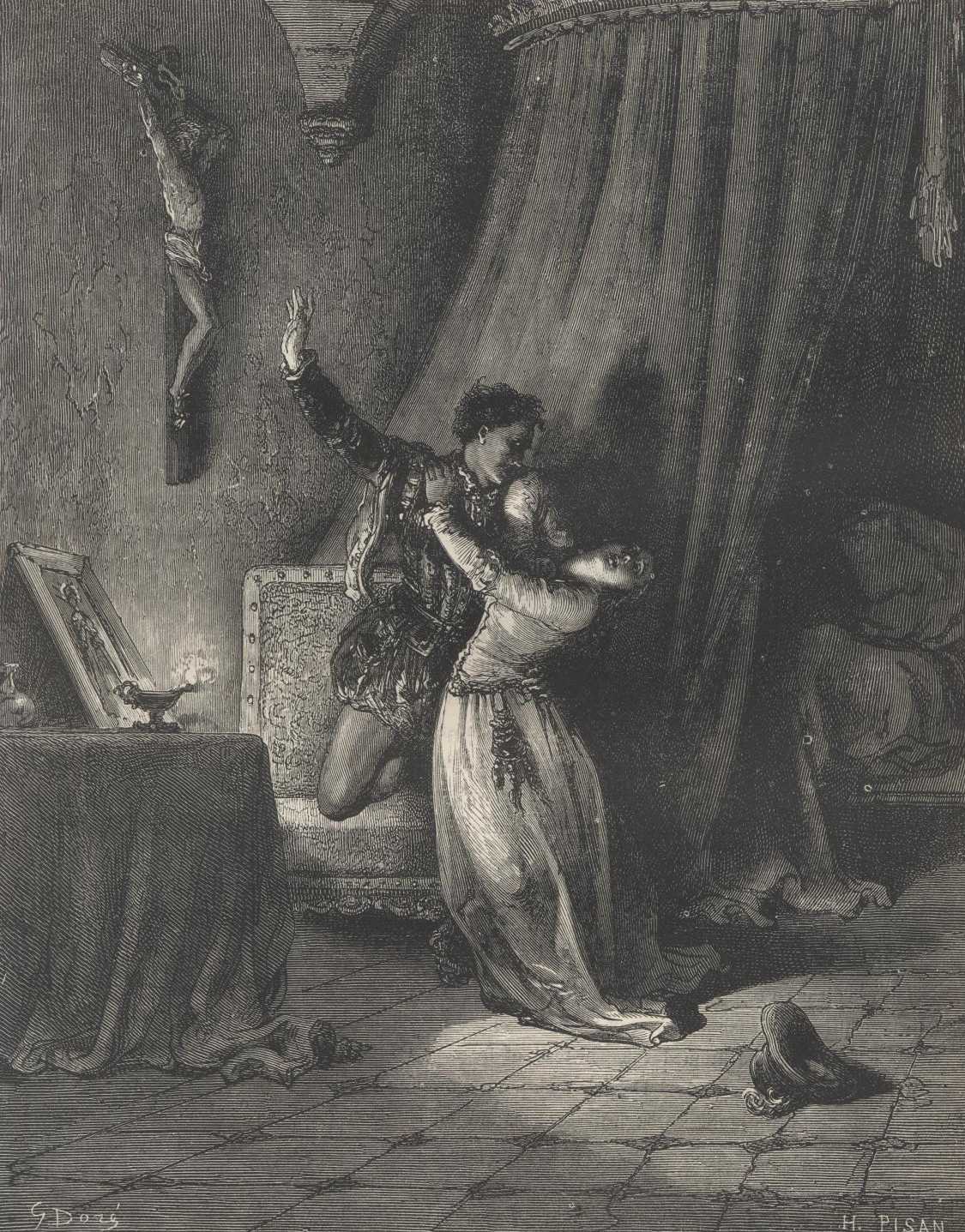
I called my waiting-maid to me, that there might be a witness on earth besides those in Heaven, and again Don Fernando renewed and repeated his oaths, invoked as witnesses fresh saints in addition to the former ones, called down upon himself a thousand curses hereafter should he fail to keep his promise, shed more tears, redoubled his sighs and pressed me closer in his arms, from which he had never allowed me to escape; and so I was left by my maid, and ceased to be one, and he became a traitor and a perjured man.

“The day which followed the night of my misfortune did not come so quickly, I imagine, as Don Fernando wished, for when desire has attained its object, the greatest pleasure is to fly from the scene of pleasure. I say so because Don Fernando made all haste to leave me, and by the adroitness of my maid, who was indeed the one who had admitted him, gained the street before daybreak; but on taking leave of me he told me, though not with as much earnestness and fervour as when he came, that I might rest assured of his faith and of the sanctity and sincerity of his oaths; and to confirm his words he drew a rich ring off his finger and placed it upon mine. /

He then took his departure and I was left, I know not whether sorrowful or happy; all I can say is, I was left agitated and troubled in mind and almost bewildered by what had taken place, and I had not the spirit, or else it did not occur to me, to chide my maid for the treachery she had been guilty of in concealing Don Fernando in my chamber; for as yet I was unable to make up my mind whether what had befallen me was for good or evil. /

--


28.4 我是你 ê 子民, 毋是奴隸

28.4 Góa sī lí ê chú-bîn, m̄-sī lô͘-lē

"... Góa chit-khoán kín-sīn, tiāⁿ-tio̍h hō͘ i tòng-chò ké-sian ké-tak, hián-jiân tian-tò cheng-ka i ê io̍k-bōng -- góa sī án-ne kóng i tùi góa ê tui-kiû. Ká-sú he sī i só͘ kóng ê án-ne, taⁿ lín tō m̄-chai che ah, in-ūi tō bô ki-hōe kā lín kóng ah lah. Chòe-āu, i chai goán pē-bú chún-pī boeh kā góa kè pa̍t-lâng, hō͘ i bô ki-hōe tit-tio̍h góa, siōng-bô boeh cheng-ka chiàu-kò͘ góa ê lâng, chit-ê siau-sit a̍h hoâi-gî, tì-sú i chhái-chhú lín tit-boeh thiaⁿ-tio̍h ê hêng-tōng. Chi̍t-àm, góa tī ka-tī ê pâng-keng, tî-liáu chi̍t-ê sū-ho̍k góa ê lú-po̍k í-gōa, bô pa̍t-lâng chò-phōaⁿ. Góa kā mn̂g chhòaⁿ hó-sè, bián-tit in-ūi so͘-hut sún-hāi bêng-ū. M̄-chai án-chóaⁿ, mā siūⁿ bē-kàu sī án-chóaⁿ, tān, tī chit-chióng siám-phiah, chit-chióng thê-hông tang-tiong, góa hoat-hiān i khiā tī góa bīn-chêng. Hit-ê kéng-siōng hō͘ góa tōa tio̍h-kiaⁿ, ba̍k-chiu khòaⁿ bô, chi̍h bē kóng-ōe. Góa bô khùi-la̍t hoah-siaⁿ, góa siūⁿ, i mā bô hō͘ góa sî-kan hoah, in-ūi i chek-khek kiâⁿ óa góa, kā góa lám tī heng-chêng. In-ūi ke̍k-tō͘ kiaⁿ-heh, góa choân-sin bô la̍t, bē-tit pó-hō͘ ka-tī. I khai-sí hiòng góa piáu-pe̍k, góa m̄-chai sī án-chóaⁿ ké-ōe ná ē-tàng kóng kah hiah-nī sêng chin-ōe. Hit-ê poān-tô͘ kè-bô͘ kō͘ ba̍k-sái chèng-bêng i ê ōe, kō͘ tōa-khùi chèng-bêng i ê chin-sim.

"Góa, ko͘ chi̍t-ê siàu-liân ko͘-niû, tī tông-phōaⁿ tiong-kan tú-tio̍h chit-chióng chōng-hóng han-bān chhú-lí, m̄-chai án-chóaⁿ góa khai-sí siong-sìn chiha-ê pe̍h-chha̍t ōe sī chin ê, m̄-koh m̄-sī hō͘ i ê tōa-khùi kap ba̍k-sái kám-tōng tio̍h, kan-ta sī tông-chêng. Chū án-ne, tán góa ê gông-ngia̍h kòe-khì liáu-āu, góa ke-kiám ū khah tìn-tēng, tō kō͘ góa ka-tī siūⁿ bē-tio̍h ê ióng-khì tùi i kóng:

"‘Góa taⁿ hō͘ lí lám-tio̍h, sian-siⁿ, ká-sú góa tī sai-jiáu ē-bīn, boeh kái-thoat tio̍h chò a̍h kóng sún-hāi góa bêng-ū ê tāi-chì, he góa chò bē-kàu, tō ná bô khó-lêng kái-piàn kòe-khì kāng-khoán. Só͘-tì, lí kō͘ siang-chhiú lám góa ê sin-khu, góa kō͘ bí-tek pó-hō͘ ka-tī ê lêng-hûn, che chha-pia̍t chin tōa, ká-sú li chhì boeh iōng-kiông, lí tio̍h ē bêng-pe̍k.

"‘Góa sī lí ê chú-bîn, m̄-sī lí ê lô͘-lē. Lí ê ko-kùi sin-hūn bē-tàng, mā bô eng-kai, ū jīm-hô khoân-lī bú-jio̍k a̍h khòaⁿ-khin góa ê pi-bî chhut-sin. Chò chi̍t-ê chhut-sin kē ê lông-bîn, kap lí chò chi̍t-ê tē-chú kap sin-sū kāng-khoán, góa ū ka-tī ê chū-chun. Tī góa bīn-chêng, lí ê po̍k-le̍k bô-hāu, lí ê châi-hù bô kè-ta̍t, lí ê ōe phiàn bē-tio̍h góa, lí ê tōa-khùi a̍h ba̍k-sái mā bē hō͘ góa lo̍h-nńg. Ká-sú góa tú-chiah kóng ê jīm-hô mi̍h-kiāⁿ chhut-hiān tī pē-bú ūi góa chhōe ê bī-lâi ang-sài sin-siōng, i ê ì-chì tō sī góa ê, góa ê ì-chì mā tio̍h kap i ê kiat-ha̍p. Tō-kóng góa bô ì-goān, góa ê bêng-ū mā ē tit-tio̍h ûi-hō͘, góa mā kam-goān kā sian-siⁿ lí taⁿ siūⁿ boeh kō͘-kiông tit-tio̍h ê mi̍h-kiāⁿ hō͘ i. Góa kóng che, bián-tit lí siūⁿ-kóng, tî-liáu góa ê ha̍p-hoat ang-sài, ū-lâng ē-tàng ùi góa chia tit-tio̍h siáⁿ-hòe.’

"‘Bí-lē ê Dorothea,’ hit-ê put-tiong ê sin-sū kiò góa ê miâ, koh án-ne kóng, ‘ká-sú he sī lí ûi-it ê kò͘-lī, tī chia góa kā chhiú kau hō͘ lí, chhiáⁿ khòaⁿ-thàng it-chhè ê Thiⁿ-kong kap chia chit-ê Sèng-bó siōng lâi chò kiàn-chèng.’" 

Cardenio thiaⁿ-tio̍h yi kóng yi kiò Dorothea ê sî, iū-koh kek-tōng khí-lâi, khak-tēng ka-tī goân-pún ê chhai-gî sī chin ê, m̄-koh i bô phah-tn̄g yi ê ōe, siūⁿ boeh thiaⁿ khòaⁿ i í-keng chai ê tāi-chì ê kiat-kio̍k, tō kan-ta án-ne kóng:

"Siáⁿ-hòe! sió-chiá, Dorothea sī lí ê miâ? Góa thiaⁿ-tio̍h lēng-gōa chi̍t-ê kāng miâ ê lâng, yi ê put-hēng kap lí ê ē pí-phēng tit. Chhiáⁿ kè-sio̍k kóng. Tán-leh góa ē-sái kóng chi̍t-kóa hō͘ lí tio̍h-kiaⁿ koh kám-kak tông-chêng ê tāi-chì."

Dorothea thiaⁿ-tio̍h Cardenio ê ōe, koh khòaⁿ i chhēng hit-su phòa-nōa, chhoah chi̍t-ē, tō kiû i, nā chai jīm-hô iú-koan yi ê tāi-chì tio̍h kín kā yi kóng. Nā kóng miā-ūn ū lâu siáⁿ hok-ūn hō͘ yi, tō sī hō͘ yi ū ióng-khì sêng-tam jīm-hô chai-lān, in-ūi yi khak-tēng, bô-lâng ē-tàng pí yi sêng-siū koh-khah chē khó͘-lān.

--

28.4 我是你 ê 子民, 毋是奴隸

"... 我這款謹慎, 定著 hō͘ 伊當做假仙假觸, 顯然顛倒增加伊 ê 慾望 -- 我是 án-ne 講伊 tùi 我 ê 追求. 假使 he 是伊所講 ê án-ne, 今恁 tō 毋知 che ah, 因為 tō 無機會 kā 恁講 ah lah. 最後, 伊知阮爸母準備欲 kā 我嫁別人, hō͘ 伊無機會得著我, 上無欲增加照顧我 ê 人, 這个消息 a̍h 懷疑, 致使伊採取恁得欲聽著 ê 行動. 一暗, 我 tī ka-tī ê 房間, 除了一个侍服我 ê 女僕以外, 無別人做伴. 我 kā 門閂好勢, 免得因為疏忽損害名譽. 毋知按怎, mā 想袂到是按怎, 但, tī 這種閃避, 這種提防當中, 我發現伊徛 tī 我面前. 彼个景象 hō͘ 我大著驚, 目睭看無, 舌袂講話. 我無氣力喝聲, 我想, 伊 mā 無 hō͘ 我時間喝, 因為伊即刻行 óa 我, kā 我攬 tī 胸前. 因為極度驚嚇, 我全身無力, 袂得保護 ka-tī. 伊開始向我表白, 我毋知是按怎假話 ná ē-tàng 講 kah hiah-nī 成真話. 彼个叛徒計謀 kō͘ 目屎證明伊 ê 話, kō͘ 大氣證明伊 ê 真心.

"我, 孤一个少年姑娘, tī 同伴中間拄著這種狀況 han-bān 處理, 毋知按怎我開始相信 chiha-ê 白賊話是真 ê, m̄-koh 毋是 hō͘ 伊 ê 大氣 kap 目屎感動著, kan-ta 是同情. 自 án-ne, 等我 ê gông-ngia̍h 過去了後, 我加減有 khah 鎮定, tō kō͘ 我 ka-tī 想袂著 ê 勇氣 tùi 伊講:

"‘我今 hō͘ 你攬著, 先生, 假使我 tī 獅爪下面, 欲解脫著做 a̍h 講損害我名譽 ê 代誌, he 我做袂到, tō ná 無可能改變過去仝款. 所致, 你 kō͘ 雙手攬我 ê 身軀, 我 kō͘ 美德保護 ka-tī ê 靈魂, che 差別真大, 假使你試欲用強, 你著 ē 明白.

"‘我是你 ê 子民, 毋是你 ê 奴隸. 你 ê 高貴身份袂當, mā 無應該, 有任何權利侮辱 a̍h 看輕我 ê 卑微出身. 做一个出身低 ê 農民, kap 你做一个地主 kap 紳士仝款, 我有 ka-tī ê 自尊. Tī 我面前, 你 ê 暴力無效, 你 ê 財富無價值, 你 ê 話騙袂著我, 你 ê 大氣 a̍h 目屎 mā 袂 hō͘ 我落軟. 假使我拄才講 ê 任何物件出現 tī 爸母為我揣 ê 未來翁婿身上, 伊 ê 意志 tō 是我 ê, 我 ê 意志 mā 著 kap 伊 ê 結合. Tō 講我無意願, 我 ê 名譽 mā ē 得著維護, 我 mā 甘願 kā 先生你今想欲 kō͘ 強得著 ê 物件 hō͘ 伊. 我講 che, 免得你想講, 除了我 ê 合法翁婿, 有人 ē-tàng ùi 我 chia 得著啥貨.’

"‘美麗 ê Dorothea,’ 彼个不忠 ê 紳士叫我 ê 名, koh án-ne 講, ‘假使 he 是你唯一 ê 顧慮, tī chia 我 kā 手交 hō͘ 你, 請看迵一切 ê 天公 kap chia 這个聖母像來做見證.’" 

Cardenio 聽著她講她叫 Dorothea ê 時, 又 koh 激動起來, 確定 ka-tī 原本 ê 猜疑是真 ê, m̄-koh 伊無拍斷她 ê 話, 想欲聽看伊已經知 ê 代誌 ê 結局, tō kan-ta án-ne 講:

"啥貨! 小姐, Dorothea 是你 ê 名? 我聽著另外一个仝名 ê 人, 她 ê 不幸 kap 你 ê ē 比並 tit. 請繼續講. 等 leh 我 ē-sái 講一寡 hō͘ 你著驚 koh 感覺同情 ê 代誌."

Dorothea 聽著 Cardenio ê 話, koh 看伊穿彼軀破爛, chhoah 一下, tō 求伊, 若知任何有關她 ê 代誌著緊 kā 她講. 若講命運有留啥福運 hō͘ 她, tō 是 hō͘ 她有勇氣承擔任何災難, 因為她確定, 無人 ē-tàng 比她承受 koh-khah 濟苦難.

--

28.4

“All this caution of mine, which he must have taken for coyness, had apparently the effect of increasing his wanton appetite—for that is the name I give to his passion for me; had it been what he declared it to be, you would not know of it now, because there would have been no occasion to tell you of it. At length he learned that my parents were contemplating marriage for me in order to put an end to his hopes of obtaining possession of me, or at least to secure additional protectors to watch over me, and this intelligence or suspicion made him act as you shall hear. One night, as I was in my chamber with no other companion than a damsel who waited on me, with the doors carefully locked lest my honour should be imperilled through any carelessness, I know not nor can conceive how it happened, but, with all this seclusion and these precautions, and in the solitude and silence of my retirement, I found him standing before me, a vision that so astounded me that it deprived my eyes of sight, and my tongue of speech. I had no power to utter a cry, nor, I think, did he give me time to utter one, as he immediately approached me, and taking me in his arms (for, overwhelmed as I was, I was powerless, I say, to help myself), he began to make such professions to me that I know not how falsehood could have had the power of dressing them up to seem so like truth; and the traitor contrived that his tears should vouch for his words, and his sighs for his sincerity.

“I, a poor young creature alone, ill versed among my people in cases such as this, began, I know not how, to think all these lying protestations true, though without being moved by his sighs and tears to anything more than pure compassion; and so, as the first feeling of bewilderment passed away, and I began in some degree to recover myself, I said to him with more courage than I thought I could have possessed, /

‘If, as I am now in your arms, señor, I were in the claws of a fierce lion, and my deliverance could be procured by doing or saying anything to the prejudice of my honour, it would no more be in my power to do it or say it, than it would be possible that what was should not have been; so then, if you hold my body clasped in your arms, I hold my soul secured by virtuous intentions, very different from yours, as you will see if you attempt to carry them into effect by force. /

I am your vassal, but I am not your slave; your nobility neither has nor should have any right to dishonour or degrade my humble birth; and low-born peasant as I am, I have my self-respect as much as you, a lord and gentleman: with me your violence will be to no purpose, your wealth will have no weight, your words will have no power to deceive me, nor your sighs or tears to soften me: were I to see any of the things I speak of in him whom my parents gave me as a husband, his will should be mine, and mine should be bounded by his; and my honour being preserved even though my inclinations were not would willingly yield him what you, señor, would now obtain by force; and this I say lest you should suppose that any but my lawful husband shall ever win anything of me.’ /

‘If that,’ said this disloyal gentleman, ‘be the only scruple you feel, fairest Dorothea’ (for that is the name of this unhappy being), ‘see here I give you my hand to be yours, and let Heaven, from which nothing is hid, and this image of Our Lady you have here, be witnesses of this pledge.’”

c28d.jpg (289K)

When Cardenio heard her say she was called Dorothea, he showed fresh agitation and felt convinced of the truth of his former suspicion, but he was unwilling to interrupt the story, and wished to hear the end of what he already all but knew, so he merely said:

“What! is Dorothea your name, señora? I have heard of another of the same name who can perhaps match your misfortunes. But proceed; by-and-by I may tell you something that will astonish you as much as it will excite your compassion.”

Dorothea was struck by Cardenio’s words as well as by his strange and miserable attire, and begged him if he knew anything concerning her to tell it to her at once, for if fortune had left her any blessing it was courage to bear whatever calamity might fall upon her, as she felt sure that none could reach her capable of increasing in any degree what she endured already.

--


28.3 我是管家, mā 是女主人

28.3 Góa sī koán-ke, mā sī lú chú-lâng

"... Góa sī in khòaⁿ ka-tī ê kiàⁿ, sī in lāu-nî ê óa-khò, sī in sūn Thiⁿ si̍t-hiān goān-bōng ê bo̍k-piau. Góa ê bo̍k-piau kap in ê it-tì, in-ūi góa chai in ê kè-ta̍t. Góa sī in ê sim-lêng tiong-sim, mā sī in ê châi-sán koán-ke. In thàu-kòe góa, chhiàⁿ a̍h sî po̍k-jîn, mā thàu-kòe góa ê chhiú, kì-lo̍k iā-chéng kap siu-sêng ê siàu-ba̍k kap siu-ek. Chiⁿ-iû-bō, kek-chiú-tháng, thâu-seⁿ, iûⁿ-tīn, kap chhī-phang siuⁿ ê sò͘-liōng, kán-tan kóng, chhiūⁿ goán lāu-pē chit-khoán hó-gia̍h lông-hu khó-lêng ū ê it-chhè, lóng iû góa koán-lí. Góa sī koán-ke, mā sī lú chú-lâng, góa ê kut-la̍t, kap in ê móa-ì, góa bô hoat-tō͘ tī chia siông-sè biô-su̍t. 

"Góa hiòng khòaⁿ-iûⁿ nía-pan, kang-thâu, kap kî-thaⁿ po̍k-jîn kau-tài khang-khòe liáu-āu ê ū-êng sî-kan, góa tō iōng-lâi chò siàu-liân ko͘-niû ē-sái chò mā eng-kai chò ê khang-khòe, chhin-chhiūⁿ chiam-sòaⁿ, chhiah-siù, pháng-chit tt [téng-téng]. Ū-sî, ūi-tio̍h pàng-sang sim-chêng, góa mā ē pàng lo̍h chiah-ê, tha̍k kóa kah-ì ê chheh, tôaⁿ khiā-khîm (harp), in-ūi keng-giām hō͘ góa chai, im-ga̍k ē-tàng tiâu-chiat kín-tiuⁿ ê sim-chêng, kiám-khin cheng-sîn ê hū-tam. Che tō sī góa tī pē-bú tau só͘ kòe ê seng-oa̍h. Góa kóng kah chiah siông-sè, m̄-sī boeh tián hong-sîn, a̍h sī boeh hō͘ lín chai góa chin hó-gia̍h, sī boeh hō͘ lín khòaⁿ-tio̍h, góa ùi chiah hēng-hok ê tiâu-kiāⁿ lûn-lo̍k kàu taⁿ chit-chióng pi-chhám chōng-hóng, oân-choân m̄-sī góa ê kòe-chhò.

"Sū-si̍t sī, góa kòe chit-chióng bô-êng ê seng-oa̍h, bē-su sī ún-ki tī siu-tō īⁿ, tî-liáu chhù-lāi po̍k-jîn, góa jīn-ûi bô gōa-lâng ē khòaⁿ-tio̍h góa, in-ūi góa khì Mî-sat lóng sī thàu-chá, sin-piⁿ kīn-kīn tòe goán lāu-bú kap chhù-lāi ê cha-bó͘, khàm bīn-se koh pháiⁿ-sè tiuh-tiuh, ba̍k-chiu kan-ta khòaⁿ kha-pō͘. Sui-bóng án-ne, Don Fernando hit-tùi ài-chêng ba̍k-chiu, a̍h ti̍t-ba̍k, kóng khah pe̍h leh, bē-su soaⁿ-niau ba̍k, hoat-hiān tio̍h góa. Don Fernando tō sī góa tú-chiah kóng ê kong-chiok in sè-hàn hāu-seⁿ."

Chi̍t-ē thiaⁿ-tio̍h Don Fernando chit-ê miâ, Cardenio ê bīn-sek sûi piàn, koh khai-sí siàng tōa kōaⁿ. Sîn-hū kap thì-thâu-sai khòaⁿ-tio̍h chit-chióng chêng-hêng, tam-sim i sī m̄-sī tit-boeh hoat-chok in thiaⁿ-kóng i ū-sî ē hoat-chok ê siáu-chèng. Ka-chài, Cardenio bô koh kek-tōng, pó-chhî an-chēng, kan-ta sī kim-kim siòng chit-ê chng-kha ko͘-niû, in-ūi i khai-sí hoâi-gî yi tàu-té sī siáng. Tān-sī yi bô chù-ì tio̍h Cardenio ê kek-tōng, kè-sio̍k kóng yi ê kò͘-sū:

"Āu-lâi i kā góa kóng, to iáu-bōe khòaⁿ chheng-chhó, i tō khì hō͘ góa kā bê-tio̍h ah, ài kah bē tiâu-ti̍t, só͘ piáu-hiān chhut-lâi ê mā sī án-ne. M̄-koh, ūi-tio̍h sok-té kóng-khí góa ê put-hēng, góa boeh thiàu-kòe chē-chē Don Fernando iōng lâi tui-kiû góa ê chhiú-tōaⁿ. I siu-bé goán chhù-lāi lâng, sàng lé-mi̍h hō͘ goán pē-bú; ta̍k-kang ná chhiūⁿ cheh-ji̍t a̍h lāu-jia̍t; àm-sî im-ga̍k hō͘ lâng khùn bē-khì; sǹg bē-liáu ê chêng-phe m̄-chai án-chóaⁿ sàng kàu góa chhiú-tiong, chhiong-móa un-jiû ê tui-kiû kap pó-chèng, tn̂g ló-ló ê tⁿ-bi̍t ōe-gí. It-chhè chiah-ê m̄-nā bô phah-tāng góa ê sim, tian-tò hō͘ góa sim-koaⁿ lia̍h ngē, tùi i hoán-kám, bē-su i sī góa ê tùi-te̍k, ta̍k-hāng i tùi góa só͘ chò ê lóng sī pháiⁿ-ì.

"Góa pēng m̄-sī bô kah-ì Don Fernando ê ko-kùi chhut-sin, mā bē ià-siān i tùi góa ê phô͘-tháⁿ. Hoat-hiān siū-tio̍h chiah chhut-sek ê sin-sū tui-kiû koh pó-sioh, hō͘ góa bó͘-chióng ê boán-chiok. Tha̍k i tī phe lāi-bīn o-ló góa, góa bē bô hoaⁿ-hí, in-ūi khah bái ê cha-bó͘ mā kah-ì thiaⁿ lâng kóng yi súi. Sī góa ka-tī ê chèng-gī kám í-ki̍p pē-bú it-chài ê kà-sī kap che sio tùi-ke̍h. Pē-bú taⁿ chin chheng-chhó Don Fernando ê bo̍k-tek, in-ūi i bô iàu-ì hō͘ kui sè-kài chai chit-chân tāi-chì.

"Pē-bú kā góa kóng, in sìn-jīm góa, mā kā in ê êng-ū kap miâ-siaⁿ kià tī góa ê bí-tek kap chiàⁿ-ti̍t, kiò góa tio̍h chù-ì Don Fernando kap góa tiong-kan ê chha-pia̍t. Ùi chia góa ē-tàng kiat-lūn, bô-lūn i kóng kah gōa hó-thiaⁿ, i ê bo̍k-tek sī i ka-tī ê khoài-lo̍k, m̄-sī góa ê lī-ek. Pē-bú koh kóng, ká-sú góa siūⁿ boeh chó͘-chí i he hi-ké ê tui-kiû, in goān-ì kā góa kè hō͘ góa kah-ì ê jīm-hô lâng, bô-lūn sī tìn-ni̍h a̍h hū-kīn só͘-chāi ê chhut-sek jîn-bu̍t. In-ūi chiū in ê châi-hù í-ki̍ip góa ê hó miâ-siaⁿ, tī ta̍k sì-kè to ē-tàng chhōe-tio̍h sio sù-phòe ê tùi-siōng. Chit-ê thê-gī í-ki̍p in ha̍p-lí ê kiàn-gī hō͘ góa kian-tēng koat-sim, tō oân-choân bô hôe Don Fernando chi̍t-kù ōe, bô hō͘ i jīm-hô sêng-kong ê hi-bāng, liân chi̍t sut-sut-á to bô...

--

28.3 我是管家, mā 是女主人

"... 我是 in 看 ka-tī ê 鏡, 是 in 老年 ê 倚靠, 是 in 順天實現願望 ê 目標. 我 ê 目標 kap in ê 一致, 因為我知 in ê 價值. 我是 in ê 心靈中心, mā 是 in ê 財產管家. In 透過我, 倩 a̍h 辭僕人, mā 透過我 ê 手, 記錄掖種 kap 收成 ê siàu-ba̍k kap 收益. 櫼油磨, 激酒桶, 頭牲, 羊陣, kap 飼蜂箱 ê 數量, 簡單講, 像阮老爸這款好額農夫可能有 ê 一切, lóng 由我管理. 我是管家 mā 是女主人, 我 ê 骨力, kap in ê 滿意, 我無法度 tī chia 詳細描述. 

"我向看羊領班, 工頭, kap 其他僕人交代工課了後 ê 有閒時間, 我 tō 用來做少年姑娘 ē-sái 做 mā 應該做 ê 工課, 親像針線, 刺繡, 紡織 tt [等等]. 有時, 為著放鬆心情, 我 mā ē 放落 chiah-ê, 讀寡佮意 ê 冊, 彈徛琴 (harp), 因為經驗 hō͘ 我知, 音樂 ē-tàng 調節緊張 ê 心情, 減輕精神 ê 負擔. Che tō 是我 tī 爸母兜所過 ê 生活. 我講 kah chiah 詳細, 毋是欲展風神, a̍h 是欲 hō͘ 恁知我真好額, 是欲 hō͘ 恁看著, 我 ùi chiah 幸福 ê 條件淪落到今這種悲慘狀況, 完全毋是我 ê 過錯.

"事實是, 我過這種無閒 ê 生活, 袂輸是隱居 tī 修道院, 除了厝內僕人, 我認為無外人 ē 看著我, 因為我去 Mî-sat lóng 是透早, 身邊近近綴阮老母 kap 厝內 ê 查某, 崁面紗 koh 歹勢 tiuh-tiuh, 目睭 kan-ta 看跤步. 雖罔 án-ne, Don Fernando hit 對愛情目睭, a̍h 直目, 講 khah 白 leh, 袂輸山貓目, 發現著我. Don Fernando tō 是我拄才講 ê 公爵 in 細漢後生."

一下聽著 Don Fernando 這个名, Cardenio ê 面色隨變, koh 開始 siàng 大汗. 神父 kap 剃頭師看著這種情形, 擔心伊是毋是得欲發作 in 聽講伊有時 ē 發作 ê 痟症. 佳哉, Cardenio 無 koh 激動, 保持安靜, kan-ta 是金金相這个庄跤姑娘, 因為伊開始懷疑她到底是 siáng. 但是她無注意著 Cardenio ê 激動, 繼續講她 ê 故事:

"後來伊 kā 我講, to 猶未看清楚, 伊 tō 去 hō͘ 我 kā 迷著 ah, 愛 kah 袂條直, 所表現出來 ê mā 是 án-ne. M̄-koh, 為著縮短講起我 ê 不幸, 我欲跳過濟濟 Don Fernando 用來追求我 ê 手段. 伊收買阮厝內人, 送 lé-mi̍h hō͘ 阮爸母; 逐工 ná 像節日 a̍h 鬧熱; 暗時音樂 hō͘ 人睏袂去; 算袂了 ê 情批毋知按怎送到我手中, 充滿溫柔 ê 追求 kap 保證, 長 ló-ló ê 甜蜜話語. 一切 chiah-ê 毋但無拍動我 ê 心, 顛倒 hō͘ 我心肝掠硬, 對伊反感, 袂輸伊是我 ê 對敵, 逐項伊對我所做 ê lóng 是歹意.

"我並毋是無佮意 Don Fernando ê 高貴出身, mā 袂厭僐伊對我 ê 扶挺. 發現受著 chiah 出色 ê 紳士追求 koh 寶惜, hō͘ 我某種 ê 滿足. 讀伊 tī 批內面 o-ló 我, 我袂無歡喜, 因為 khah 䆀 ê 查某 mā 佮意聽人講她媠. 是我 ka-tī ê 正義感以及爸母一再 ê 教示 kap che sio 對扴. 爸母今真清楚 Don Fernando ê 目的, 因為伊無要意 hō͘ 規世界知這層代誌.

"爸母 kā 我講, in 信任我, mā kā in ê 榮譽 kap 名聲寄 tī 我 ê 美德 kap 正直, 叫我著注意 Don Fernando kap 我中間 ê 差別. Ùi chia 我 ē-tàng 結論, 無論伊講 kah 偌好聽, 伊 ê 目的是伊 ka-tī ê 快樂, 毋是我 ê 利益. 爸母 koh 講, 假使我想欲阻止伊 he 虛假 ê 追求, in 願意 kā 我嫁 hō͘ 我佮意 ê 任何人, 無論是鎮 ni̍h a̍h 附近所在 ê 出色人物. 因為就 in ê 財富以及我 ê 好名聲, tī ta̍k 四界 to ē-tàng 揣著 sio 四配 ê 對象. 這个提議以及 in 合理 ê 建議 hō͘ 我堅定決心, tō 完全無回 Don Fernando 一句話, 無 hō͘ 伊任何成功 ê 希望, 連一屑屑仔 to 無...

--

28.3

“I was the mirror in which they beheld themselves, the staff of their old age, and the object in which, with submission to Heaven, all their wishes centred, and mine were in accordance with theirs, for I knew their worth; and as I was mistress of their hearts, so was I also of their possessions. Through me they engaged or dismissed their servants; through my hands passed the accounts and returns of what was sown and reaped; the oil-mills, the wine-presses, the count of the flocks and herds, the beehives, all in short that a rich farmer like my father has or can have, I had under my care, and I acted as steward and mistress with an assiduity on my part and satisfaction on theirs that I cannot well describe to you. /

The leisure hours left to me after I had given the requisite orders to the head-shepherds, overseers, and other labourers, I passed in such employments as are not only allowable but necessary for young girls, those that the needle, embroidery cushion, and spinning wheel usually afford, and if to refresh my mind I quitted them for a while, I found recreation in reading some devotional book or playing the harp, for experience taught me that music soothes the troubled mind and relieves weariness of spirit. Such was the life I led in my parents’ house and if I have depicted it thus minutely, it is not out of ostentation, or to let you know that I am rich, but that you may see how, without any fault of mine, I have fallen from the happy condition I have described, to the misery I am in at present. /

The truth is, that while I was leading this busy life, in a retirement that might compare with that of a monastery, and unseen as I thought by any except the servants of the house (for when I went to Mass it was so early in the morning, and I was so closely attended by my mother and the women of the household, and so thickly veiled and so shy, that my eyes scarcely saw more ground than I trod on), in spite of all this, the eyes of love, or idleness, more properly speaking, that the lynx’s cannot rival, discovered me, with the help of the assiduity of Don Fernando; for that is the name of the younger son of the duke I told of.”

The moment the speaker mentioned the name of Don Fernando, Cardenio changed colour and broke into a sweat, with such signs of emotion that the curate and the barber, who observed it, feared that one of the mad fits which they heard attacked him sometimes was coming upon him; but Cardenio showed no further agitation and remained quiet, regarding the peasant girl with fixed attention, for he began to suspect who she was. She, however, without noticing the excitement of Cardenio, continuing her story, went on to say:

“And they had hardly discovered me, when, as he owned afterwards, he was smitten with a violent love for me, as the manner in which it displayed itself plainly showed. But to shorten the long recital of my woes, I will pass over in silence all the artifices employed by Don Fernando for declaring his passion for me. He bribed all the household, he gave and offered gifts and presents to my parents; every day was like a holiday or a merry-making in our street; by night no one could sleep for the music; the love letters that used to come to my hand, no one knew how, were innumerable, full of tender pleadings and pledges, containing more promises and oaths than there were letters in them; all which not only did not soften me, but hardened my heart against him, as if he had been my mortal enemy, and as if everything he did to make me yield were done with the opposite intention. /

Not that the high-bred bearing of Don Fernando was disagreeable to me, or that I found his importunities wearisome; for it gave me a certain sort of satisfaction to find myself so sought and prized by a gentleman of such distinction, and I was not displeased at seeing my praises in his letters (for however ugly we women may be, it seems to me it always pleases us to hear ourselves called beautiful) but that my own sense of right was opposed to all this, as well as the repeated advice of my parents, who now very plainly perceived Don Fernando’s purpose, for he cared very little if all the world knew it. /

They told me they trusted and confided their honour and good name to my virtue and rectitude alone, and bade me consider the disparity between Don Fernando and myself, from which I might conclude that his intentions, whatever he might say to the contrary, had for their aim his own pleasure rather than my advantage; and if I were at all desirous of opposing an obstacle to his unreasonable suit, they were ready, they said, to marry me at once to anyone I preferred, either among the leading people of our own town, or of any of those in the neighbourhood; for with their wealth and my good name, a match might be looked for in any quarter. This offer, and their sound advice strengthened my resolution, and I never gave Don Fernando a word in reply that could hold out to him any hope of success, however remote.

c28c.jpg (279K)

--


28.2 阮願意為你效勞

28.2 Goán goān-ì ūi lí hāu-lô

"Chhiáⁿ lâu lo̍h-lâi, sió-chiá, m̄-koán lí sī siáng, goán lóng goān-ì ūi lí hāu-lô. Lí bô su-iàu hong-kông cháu khui, m̄-nā lí ê kha bē-kham-tit, goán mā m̄-khéng."

Kiaⁿ chi̍t-tiô, koh m̄-chai án-nóa hó, yi bô ìn-ōe. Put-jî-kò, in kiâⁿ óa yi, sîn-hū khan yi ê chhiú, kè-sio̍k kóng:

"Lí ê chheng-chhah boeh am-khàm ê, hō͘ lí ê thâu-chang po̍k-lō͘ ah. Chin bêng-hián, tiāⁿ-tio̍h sī kài tōa ê in-toaⁿ, lí chiah ē kō͘ che bô ha̍h ê ho̍k-chong am-khàm bí-māu, koh lâi kàu chiah ko͘-che̍k ê só͘-chāi. Ka-chài goán hoat-hiān lí, tō kóng bô hoat-tō͘ kiám-khin lí ê thòng-khó͘, siōng-bô goán ē-tàng kā lí an-ùi. Chí-iàu oa̍h-tio̍h, jīm-hô thòng-khó͘ m̄-koán gōa tōa, bô eng-kai ta̍t-kàu siū-khó͘ ê lâng kī-choa̍t thiaⁿ hó-ì ê an-ùi. Só͘-tì, sió-chiá, a̍h sian-siⁿ, chāi lí kah-ì, chhiáⁿ m̄-thang hō͘ goán ê chhut-hiān kiaⁿ-tio̍h. Hō͘ goán chai lí ê chōng-hóng, m̄-koán hó-bái, in-ūi goán choân-pō͘ a̍h kò-jîn, ē-sái hun-tam lí ê put-hēng."

Sîn-hū ná teh kóng ê sî, chng-pān ko͘-niû bē-su tiòng-tio̍h mô͘-hoat, khiā hia khòaⁿ in, bô khui-chhùi a̍h kóng-ōe, ká-ná chng-kha sông hut-jiân khòaⁿ-tio̍h m̄-bat khòaⁿ-kòe ê hi-kî mi̍h-kiāⁿ. M̄-koh, tán sîn-hū koh kóng kóa kāng-khoán ê ōe liáu-āu, yi chiah chhim-chhim suh chi̍t-kháu khùi, khui-chhùi án-ne kóng:

"Kì-jiân ko͘-che̍k ê soaⁿ bē-tit am-khàm góa, sòaⁿ-khui ê thâu-chang m̄-chún góa kóng pe̍h-chha̍t, taⁿ góa mā bián koh ké-sian ké-tak. Lín nā siong-sìn góa, góa án-ne chò sī chhut tī lé-māu, m̄-sī chhut tī kî-thaⁿ in-toaⁿ. Kì-jiân án-ne, lia̍t-ūi sian-siⁿ, góa kám-siā lín, in-ūi lín ê hó-ì, góa ū gī-bū sūn-chiông lín ê iau-kiû. M̄-koh, góa khióng-kiaⁿ, góa ê put-hēng kan-ta ē tit-tio̍h lín ê tông-chêng, tān lín mā bô siáⁿ hoat-tō͘ ē-tit pó͘-kiù a̍h kā he kiám-khin. Put-jî-kò, ūi-tio̍h mài hō͘ lín hoâi-gî góa ê bêng-ū, taⁿ, kì-jiân lín í-keng hoat-hiān góa sī chi̍t-ê cha-bó͘, koh khòaⁿ-tio̍h góa iáu siàu-liân, ko͘ chi̍t-lâng, koh chit-sin táⁿ-pān, it-chhè chiah-ê, m̄-koán chò-hóe a̍h hun-khui, lóng ē pāi-hāi góa ê miâ-siaⁿ, góa kám-kak góa ū pit-iàu kā goân-pún boeh pó-siú ê pì-bi̍t kóng hō͘ lín chai."

Khòaⁿ khí-lâi sī chi̍t-ê súi cha-bó͘ ê yi, chi̍t-sut-á to bô tiû-tû kóng-chhut chiah-ê ōe, khin-khin sang-sang, siaⁿ-tiāu iu-bí, hō͘ in him-sióng m̄-nā yi ê bí-māu, koh-khah sī yi ê tì-hūi. Tán in koh-chài piáu-sī goān-ì pang-chō͘, koh chhiáⁿ yi kóng ka-tī ê tāi-chì ê sî, yi bô koh the-sî, tō seng bān-bān kā ê-á chhēng khí-lâi, koh kā thâu-chang cháng hó-sè, ka-tī chē tī chi̍t-tè chio̍h-thâu, tán iáu 3-lâng ûi tī piⁿ-á chē, jiân-āu chīn-la̍t jím-tiâu ba̍k-sái, chiah kō͘ chheng-liāng, ûn-ûn-á ê siaⁿ-tiāu khai-sí kóng yi ê kò͘-sū:

"Tī Andalusia chi̍t-ê sió-tìn, ū chi̍t-ê kong-chiok ū Sepanga Tāi-jîn ê miâ-hō. Kong-chiok ū 2-ê hāu-seⁿ. Tōa kiáⁿ kè-sêng i ê chiok-ūi, mā hián-jiân ū i ê hó phín-hēng. Sè-hàn kiáⁿ kè-sêng siáⁿ, góa m̄-chai, m̄-koh Vellido ê pōe-sìn kap Ganelon ê hi-ké, i chiâu ē. Goán pē-bú sī kong-chiok ê chú-bîn, chhut-sin kē, tān put-chí-á ū-chîⁿ. Ká-sú tē-ūi ē-tit kap châi-hù sio pí-phēng, in tō bô ûi-hām ah, góa mā bián-kiaⁿ lo̍k-phek kàu chit-má chit-ê tē-pō͘. Góa ê put-hēng, chin khó-lêng tō sī in-ūi bô chhut-sì tī kùi-cho̍k ka-têng.

“Sū-si̍t-siōng, in ê tē-ūi mā bô kē kah hō͘ in kám-kak kiàn-siàu, tān mā bô koân kah bē hō͘ góa jīn-ûi góa ê put-hēng sī in-ūi in ê chhut-sin. Kán-tan kóng, in sī chò-sit-lâng, phó͘-thong peh-sèⁿ, bô bái miâ-siaⁿ ê hiat-thóng, mā sī ná sio̍k-gí só͘ kóng ê lāu-phài Kitok-tô͘. In-ūi ū-chîⁿ, koh seng-oa̍h chū-iû chū-chāi, in chiām-chiām hông khòaⁿ chò sī sin-sū, sīm-chì jīn-ûi sī ū tē-ūi ê lâng. M̄-koh, in jīn-ûi siōng tōa ê châi-hù kap chun-kùi tō sī ū góa chit-ê cha-bó͘-kiáⁿ. In-ūi bô kî-thaⁿ kiáⁿ-jî, pē-bú kā góa thiàⁿ miā-miā, hō͘ góa chiâⁿ-chò siōng-kài siū théng-sēng ê cha-bó͘-kiáⁿ...

--

28.2 阮願意為你效勞

"請留落來, 小姐, 毋管你是 siáng, 阮 lóng 願意為你效勞. 你無需要慌狂走開, 毋但你 ê 跤袂堪得, 阮 mā 毋肯."

驚一趒, koh 毋知 án-nóa 好, 她無應話. 不而過, in 行倚她, 神父牽她 ê 手, 繼續講:

"你 ê 穿插欲掩崁 ê, hō͘ 你 ê 頭鬃暴露 ah. 真明顯, 定著是 kài 大 ê 因端, 你才 ē kō͘ che 無合 ê 服裝掩崁美貌, koh 來到 chiah 孤寂 ê 所在. 佳哉阮發現你, tō 講無法度減輕你 ê 痛苦, 上無阮 ē-tàng kā 你安慰. 只要活著, 任何痛苦毋管偌大, 無應該達到受苦 ê 人拒絕聽好意 ê 安慰. 所致, 小姐, a̍h 先生, 在你佮意, 請 m̄-thang hō͘ 阮 ê 出現驚著. Hō͘ 阮知你 ê 狀況, 毋管好䆀, 因為阮全部 a̍h 個人, ē-sái 分擔你 ê 不幸."

神父 ná teh 講 ê 時, 裝扮姑娘袂輸中著魔法, 徛 hia 看 in, 無開喙 a̍h 講話, ká-ná 庄跤倯忽然看著 m̄-bat 看過 ê 稀奇物件. M̄-koh, 等神父 koh 講寡仝款 ê 話了後, 她才深深欶一口氣, 開喙 án-ne 講:

"既然孤寂 ê 山袂得掩崁我, 散開 ê 頭鬃毋准我講白賊, 今我 mā 免 koh 假仙假觸. 恁若相信我, 我 án-ne 做是出 tī 禮貌, 毋是出 tī 其他因端. 既然 án-ne, 列位先生, 我感謝恁, 因為恁 ê 好意, 我有義務順從恁 ê 要求. M̄-koh, 我恐驚, 我 ê 不幸 kan-ta ē 得著恁 ê 同情, 但恁 mā 無啥法度 ē-tit 補救 a̍h kā he 減輕. 不而過, 為著莫 hō͘ 恁懷疑我 ê 名譽, 今, 既然恁已經發現我是一个查某, koh 看著我猶少年, 孤一人, koh 這身打扮, 一切 chiah-ê, 毋管做伙 a̍h 分開, lóng ē 敗害我 ê 名聲, 我感覺我有必要 kā 原本欲保守 ê 祕密講 hō͘ 恁知."

看起來是一个媠查某 ê 她, 一屑仔 to 無躊躇講出 chiah-ê 話, 輕輕鬆鬆, 聲調優美, hō͘ in 欣賞毋但她 ê 美貌, koh-khah 是她 ê 智慧. 等 in koh 再表示願意幫助, koh 請她講 ka-tī ê 代誌 ê 時, 她無 koh 推辭, tō 先慢慢 kā 鞋仔穿起來, koh kā 頭鬃摠好勢, ka-tī 坐 tī 一塊石頭, 等猶 3 人圍 tī 邊仔坐, 然後盡力忍牢目屎, 才 kō͘ 清亮, 勻勻仔 ê 聲調開始講她 ê 故事:

"Tī Andalusia 一个小鎮, 有一个公爵有 Sepanga 大人 ê 名號. 公爵有 2 个後生. 大囝繼承伊 ê 爵位, mā 顯然有伊 ê 好品行. 細漢囝繼承啥, 我毋知, m̄-koh Vellido ê 背信 kap Ganelon ê 虛假, 伊 chiâu ē. 阮爸母是公爵 ê 子民, 出身低, 但不止仔有錢. 假使地位 ē-tit kap 財富 sio 比並, in tō 無遺憾 ah, 我 mā 免驚落魄到 chit-má 這个地步. 我 ê 不幸, 真可能 tō 是因為無出世 tī 貴族家庭.

“事實上, in ê 地位 mā 無低 kah hō͘ in 感覺見笑, 但 mā 無懸 kah 袂 hō͘ 我認為我 ê 不幸是因為 in ê 出身. 簡單講, in 是做穡人, 普通百姓, 無䆀名聲 ê 血統, mā 是 ná 俗語所講 ê 老派 Kitok 徒. 因為有錢, koh 生活自由自在, in 漸漸 hông 看做是紳士, 甚至認為是有地位 ê 人. M̄-koh, in 認為上大 ê 財富 kap 尊貴 tō 是有我這个查某囝. 因為無其他囝兒, 爸母 kā 我疼命命, hō͘ 我成做 siōng-kài 受寵倖 ê 查某囝...

--

28.2

“Stay, señora, whoever you may be, for those whom you see here only desire to be of service to you; you have no need to attempt a flight so heedless, for neither can your feet bear it, nor we allow it.”

Taken by surprise and bewildered, she made no reply to these words. They, however, came towards her, and the curate taking her hand went on to say:

“What your dress would hide, señora, is made known to us by your hair; a clear proof that it can be no trifling cause that has disguised your beauty in a garb so unworthy of it, and sent it into solitudes like these where we have had the good fortune to find you, if not to relieve your distress, at least to offer you comfort; for no distress, so long as life lasts, can be so oppressive or reach such a height as to make the sufferer refuse to listen to comfort offered with good intention. And so, señora, or señor, or whatever you prefer to be, dismiss the fears that our appearance has caused you and make us acquainted with your good or evil fortunes, for from all of us together, or from each one of us, you will receive sympathy in your trouble.”

While the curate was speaking, the disguised damsel stood as if spell-bound, looking at them without opening her lips or uttering a word, just like a village rustic to whom something strange that he has never seen before has been suddenly shown; but on the curate addressing some further words to the same effect to her, sighing deeply she broke silence and said:

“Since the solitude of these mountains has been unable to conceal me, and the escape of my dishevelled tresses will not allow my tongue to deal in falsehoods, it would be idle for me now to make any further pretence of what, if you were to believe me, you would believe more out of courtesy than for any other reason. This being so, I say I thank you, sirs, for the offer you have made me, which places me under the obligation of complying with the request you have made of me; though I fear the account I shall give you of my misfortunes will excite in you as much concern as compassion, for you will be unable to suggest anything to remedy them or any consolation to alleviate them. However, that my honour may not be left a matter of doubt in your minds, now that you have discovered me to be a woman, and see that I am young, alone, and in this dress, things that taken together or separately would be enough to destroy any good name, I feel bound to tell what I would willingly keep secret if I could.”

All this she who was now seen to be a lovely woman delivered without any hesitation, with so much ease and in so sweet a voice that they were not less charmed by her intelligence than by her beauty, and as they again repeated their offers and entreaties to her to fulfil her promise, she without further pressing, first modestly covering her feet and gathering up her hair, seated herself on a stone with the three placed around her, and, after an effort to restrain some tears that came to her eyes, in a clear and steady voice began her story thus:

“In this Andalusia there is a town from which a duke takes a title which makes him one of those that are called Grandees of Spain. This nobleman has two sons, the elder heir to his dignity and apparently to his good qualities; the younger heir to I know not what, unless it be the treachery of Vellido and the falsehood of Ganelon. My parents are this lord’s vassals, lowly in origin, but so wealthy that if birth had conferred as much on them as fortune, they would have had nothing left to desire, nor should I have had reason to fear trouble like that in which I find myself now; for it may be that my ill fortune came of theirs in not having been nobly born. /

It is true they are not so low that they have any reason to be ashamed of their condition, but neither are they so high as to remove from my mind the impression that my mishap comes of their humble birth. They are, in short, peasants, plain homely people, without any taint of disreputable blood, and, as the saying is, old rusty Christians, but so rich that by their wealth and free-handed way of life they are coming by degrees to be considered gentlefolk by birth, and even by position; though the wealth and nobility they thought most of was having me for their daughter; and as they have no other child to make their heir, and are affectionate parents, I was one of the most indulged daughters that ever parents indulged./

--


28. 神父 kap 剃頭師拄著 ê 神奇事項/ 28.1 跤像水晶, 手像雪

28. Sîn-hū kap thì-thâu-sai tú-tio̍h ê sîn-kî sū-hāng

28.1 Kha chhiūⁿ chúi-chiⁿ, chhiú chhiūⁿ seh

He sī hēng-hok koh hó-ūn ê sî-tāi, hit-sî La Mancha chòe ióng-kám ê khî-sū Don Quixote lâi-kàu sè-kan. I chò-chhut chi̍t-ê kong-êng ê koat-tēng, boeh ho̍k-chín he í-keng kú-kú sit-thoân tī sè-kài ê khî-sū-tō, hō͘ lán tī chit-ê khiàm-khoat khin-sang gô͘-lo̍k ê sî-tāi, hiáng-siū tio̍h m̄-nā he bê-lâng ê chin-si̍t le̍k-sú, koh ū he lāi-bīn ê kò͘-sū chêng-chat, he tī thêng-tō͘-siōng, bē khah su le̍k-sú pún-sin ê chhù-bī, ò-miāu, chin-si̍t. Tī chit-phiⁿ, iân hit-ê le̍k-sú ê sòaⁿ-soh, lán kè-sio̍k kā se, kā pháng, kā pīⁿ, kóng kàu sîn-hū tú boeh kóng kóa ōe an-ùi Cardenio ê sî, i ê hīⁿ-khang piⁿ thoân lâi chi̍t-ê siaⁿ-im, kō͘ chhe-liâng ê siaⁿ-tiāu án-ne kóng:

"O Sîn ah! Kám ū khó-lêng góa í-keng chhōe-tio̍h chi̍t-ê só͘-chāi, he ē-tàng chò góa ê pì-bi̍t bōng-á, tâi chit-khū góa giâ kah chiah sin-khó͘ ê sin-khu? Jû-kó che soaⁿ-khu ê ko͘-che̍k bô khi-phiàn góa, tāi-chì tō sī án-ne lah! Ah! góa chin chhi-chhám! Góa tōa-tōa kám-siā chia ê chio̍h-thâu kap chhì-phè kap góa chò-phōaⁿ, hō͘ góa ē-tit ǹg Thiⁿ oàn-thàn góa ê put-hēng, in-ūi tī sè-kan, giâu-gî bô-tè chham-siâng, pi-siong bô-tè an-ùi, àu-náu bô-tè tháu-kái!"

Chiah-ê ōe, sîn-hū kap sin-piⁿ ê lâng lóng thiaⁿ chin chheng-chhó, kám-kak he tō tī hū-kīn. Sū-si̍t mā sī án-ne, in-ūi in chi̍t-ē khí-sin khì chhōe kóng he ōe ê lâng, kiâⁿ bô 20-pō͘ tō tī chi̍t-lia̍p tōa chio̍h-thâu āu-bīn, hoat-hiān chi̍t-ê chò-sit-lâng táⁿ-pān ê siàu-liân-ke, chē tī chi̍t-châng pe̍h-la̍h chhiū (ash tree) kha. I ê bīn khòaⁿ bē-tio̍h, in-ūi i tú-hó àⁿ-sin hiòng chêng, teh sé chìm tī lâu-kòe khe-chúi ni̍h ê kha. In chēng-chēng kiâⁿ óa, i chi̍t-sut-á to bô chù-ì tio̍h in, kan-ta sī choan-sim teh sé i ê kha. He kha pe̍h chhang-chhang, bē-su khe-té chio̍h-thâu tiong-kan nn̄g-tè siám-sih ê chúi-chiⁿ. 

He kha pe̍h koh súi, hō͘ in tio̍h chi̍t-kiaⁿ, in-ūi chiàu chú-lâng ê chhēng-chhah lâi khòaⁿ, he bô sêng sī ta̍h chhân-thô͘ a̍h tòe lê kap gû ê kha. Chū án-ne, kì-jiân bô pī hoat-kak, kiâⁿ thâu-chêng ê sîn-hū tō kā lēng-gōa nn̄g-lâng chò chhiú-sè, bih kàu hū-kīn ê kúi-tè chio̍h-thâu āu-bīn. Bih hó liáu-āu, in tō tī hia koan-chhat hit-ê siàu-liân-ke. I chhēng chi̍t-niá khoah-khoah ê chhim chang-sek siang-ki gōa-thò, kō͘ chi̍t-tiâu pe̍h-pò͘ kā he hâ ân tī sin-khu. Ē-sin chhēng ê sī chang-sek pò͘-liāu ê bé-khò͘ kap khiā-háng, thâu-khak tì chi̍t-téng chang-sek montera bō-á. I kā khiā-háng pih kàu kha-tó͘, he kha-tó͘ chèng-keng pe̍h kah ná chio̍h-ko.

Súi kha chi̍t-ē sé hó-sè, i sûi kō͘ ùi bō-á ē-bīn giú lo̍h-lâi ê mô͘-kin kā chhit ta, tī giú mô͘-kin ê sî, i ê bīn taⁿ khí-lâi, hō͘ tng-teh khòaⁿ i ê lâng ū ki-hōe khòaⁿ i he iù-tì súi bīn, Cardenio khin-siaⁿ ǹg sîn-hū kóng:

"Kì-jiân che m̄-sī Luscinda, che m̄-sī hoân-jîn, eng-kai sī sîn-sian."

Chit-sî, siàu-liân-ke chhái-lo̍h bō-á, tōa-la̍t hàiⁿ thâu-khak, hàiⁿ-lo̍h chi̍t-thâu ê tn̂g thau-mo͘, ji̍t-thâu kng khòaⁿ-tio̍h to ē him-siān. Kàu chit-sî, tī hia khòaⁿ ê lâng chai-iáⁿ, he khòaⁿ ná chò-sit-lâng ê lâng, goân-lâi sī chi̍t-ê khó-ài ê cha-bó͘, sîn-hū kap thì-thâu-sai m̄-bat khòaⁿ-kòe chiah súi ê cha-bó͘, nā m̄ sī Cardenio bat khòaⁿ-kòe koh bat Luscinda, i mā ē án-ne siūⁿ. Sū-āu Cardenio toàn-tēng, kan-ta Luscinda ê bí-māu kap che ē-tit pí-phēg. 

He tn̂g-tn̂g ê o͘ thâu-chang, m̄-nā khàm tio̍h yi ê keng-kah-thâu, sīm-chì tn̂g koh ōng, tî-liáu siang-kha í-gōa, kā kui-ê sin-khu jia-tio̍h, khòaⁿ bē-chhut yi ê hêng-thé. Taⁿ yi kō͘ siang-chhiú chò loa̍h-á loa̍h thâu-chang. Nā kóng he kha chhiūⁿ chúi-té ê chúi-chiⁿ, yi ê siang-chhiú khòaⁿ-tio̍h tō ná phiau tī thâu-chang si tiong-kan ê seh-phìⁿ. It-chhè chiah-ê, m̄-nā cheng-ka teh khòaⁿ 3-lâng ê chàn-thàn, koh-khah hō͘ in kip-chhiat boeh chai tàu-té yi sī siáⁿ-lâng.

In-ūi án-ne, 3-lâng koat-tēng hiàn-sin. In khí-sin ê siaⁿ ín-khí bí-lē ko͘-niû gia̍h-thâu, kō͘ siang-chhiú póe-khui ba̍k-chiu chêng ê thâu-chang, khòaⁿ he siaⁿ tàu-té sī siáⁿ. Chi̍t-ē khòaⁿ tio̍h in, yi sûi khiā khí-lâi, bô-khà chhēng ê-á a̍h láng thâu-chang, tō kóaⁿ kín-kín sa-khí sin-piⁿ chi̍t-pa̍k ká-ná sī saⁿ-á ê mi̍h-kiāⁿ, kiaⁿ koh heh, khí-kha tō cháu. Tān, cháu bô 6-pō͘, yi tō poa̍h-tó tī thô͘-kha, in-ūi yi iù-tì ê siang-kha bē-kham-tit ta̍h he kham-khia̍t ê chio̍h-thâu-á. Khòaⁿ-tio̍h chit-chióng chêng-hêng, 3-lâng kín lâi kàu yi bīn-chêng. Sîn-hū siú-sian khui-chhùi án-ne kóng:

--

28. 神父 kap 剃頭師拄著 ê 神奇事項

28.1 跤像水晶, 手像雪

He 是幸福 koh 好運 ê 時代, 彼時 La Mancha 最勇敢 ê 騎士 Don Quixote 來到世間. 伊做出一个光榮 ê 決定, 欲復振 he 已經久久失傳 tī 世界 ê 騎士道, hō͘ 咱 tī 這个欠缺輕鬆娛樂 ê 時代, 享受著毋但 he 迷人 ê 真實歷史, koh 有 he 內面 ê 故事情節, he tī 程度上, 袂較輸歷史本身 ê 趣味, 奧妙, 真實. Tī 這篇, 沿彼个歷史 ê 線索, 咱繼續 kā 梳, kā 紡, kā 辮, 講到神父拄欲講寡話安慰 Cardenio ê 時, 伊 ê 耳空邊傳來一个聲音, kō͘ 淒涼 ê 聲調 án-ne 講:

"O 神 ah! Kám 有可能我已經揣著一个所在, he ē-tàng 做我 ê 祕密墓仔, 埋這具我夯 kah chiah 辛苦 ê 身軀? 如果 che 山區 ê 孤寂無欺騙我, 代誌 tō 是 án-ne lah! Ah! 我真悽慘! 我大大感謝 chia ê 石頭 kap chhì-phè kap 我做伴, hō͘ 我 ē-tit ǹg 天怨嘆我 ê 不幸, 因為 tī 世間, 憢疑無地參詳, 悲傷無地安慰, 懊惱無地敨解!"

Chiah-ê 話, 神父 kap 身邊 ê 人 lóng 聽真清楚, 感覺 he tō tī 附近. 事實 mā 是 án-ne, 因為 in 一下起身去揣講 he 話 ê 人, 行無 20 步 tō tī 一粒大石頭後面, 發現一个做穡人打扮 ê 少年家, 坐 tī 一叢白蠟樹 (ash tree) 跤. 伊 ê 面看袂著, 因為伊拄好 àⁿ 身向前, teh 洗浸 tī 流過溪水 ni̍h ê 跤. In 靜靜行倚, 伊一屑仔 to 無注意著 in, kan-ta 是專心 teh 洗伊 ê 跤. He 跤白蔥蔥, 袂輸溪底石頭中間兩塊閃爍 ê 水晶. 

He 跤白 koh 媠, hō͘ in 著一驚, 因為照主人 ê 穿插來看, he 無成是踏田塗 a̍h 綴犁 kap 牛 ê 跤. 自 án-ne, 既然無被發覺, 行頭前 ê 神父 tō kā 另外兩人做手勢, 覕到附近 ê 幾塊石頭後面. 覕好了後, in tō tī hia 觀察彼个少年家. 伊穿一領闊闊 ê 深棕色雙裾外套, kō͘ 一條白布 kā he 縖絚 tī 身軀. 下身穿 ê 是棕色布料 ê 馬褲 kap khiā-háng, 頭殼戴一頂棕色 montera 帽仔. 伊 kā khiā-háng pih 到跤肚, he 跤肚正經白 kah ná 石膏.

媠跤一下洗好勢, 伊隨 kō͘ ùi 帽仔下面搝落來 ê 毛巾 kā 拭 ta, tī 搝毛巾 ê 時, 伊 ê 面 taⁿ 起來, hō͘ tng-teh 看伊 ê 人有機會看伊 he 幼致媠面, Cardenio 輕聲 ǹg 神父講:

"既然 che 毋是 Luscinda, che 毋是凡人, 應該是神仙."

這時, 少年家採落帽仔, 大力幌頭殼, 幌落一頭 ê 長頭毛, 日頭光看著 to ē 欣羨. 到這時, tī hia 看 ê 人知影, he 看 ná 做穡人 ê 人, 原來是一个可愛 ê 查某, 神父 kap 剃頭師 m̄-bat 看過 chiah 媠 ê 查某, 若毋是 Cardenio bat 看過 koh bat Luscinda, 伊 mā ē án-ne 想. 事後 Cardenio 斷定, kan-ta Luscinda ê 美貌 kap che ē-tit 比並. 

He 長長 ê 烏頭鬃, 毋但崁著她 ê 肩胛頭, 甚至長 koh 旺, 除了雙跤以外, kā 規个身軀遮著, 看袂出她 ê 形體. 今她 kō͘ 雙手做捋仔捋頭鬃. 若講 he 跤像水底 ê 水晶, 她 ê 雙手看著 tō ná 飄 tī 頭鬃絲中間 ê 雪片. 一切 chiah-ê, 毋但增加 teh 看 3 人 ê 讚嘆, koh-khah hō͘ in 急切欲知到底她是啥人.

因為 án-ne, 3 人決定現身. In 起身 ê 聲引起美麗姑娘攑頭, kō͘ 雙手掰開目睭前 ê 頭鬃, 看 he 聲到底是啥. 一下看著 in, 她隨徛起來, bô-khà 穿鞋仔 a̍h láng 頭鬃, tō 趕緊緊捎起身邊一縛 ká-ná 是衫仔 ê 物件, 驚 koh heh, 起跤 tō 走. 但, 走無 6 步, 她 tō 跋倒 tī 塗跤, 因為她幼致 ê 雙跤袂堪得踏 he kham-khia̍t ê 石頭仔. 看著這種情形, 3 人緊來到她面前. 神父首先開喙 án-ne 講:

--

CHAPTER XXVIII.

WHICH TREATS OF THE STRANGE AND DELIGHTFUL ADVENTURE THAT BEFELL THE CURATE AND THE BARBER IN THE SAME SIERRA

c28a.jpg (159K)

28.1

Happy and fortunate were the times when that most daring knight Don Quixote of La Mancha was sent into the world; for by reason of his having formed a resolution so honourable as that of seeking to revive and restore to the world the long-lost and almost defunct order of knight-errantry, we now enjoy in this age of ours, so poor in light entertainment, not only the charm of his veracious history, but also of the tales and episodes contained in it which are, in a measure, no less pleasing, ingenious, and truthful, than the history itself; which, resuming its thread, carded, spun, and wound, relates that just as the curate was going to offer consolation to Cardenio, he was interrupted by a voice that fell upon his ear saying in plaintive tones:

“O God! is it possible I have found a place that may serve as a secret grave for the weary load of this body that I support so unwillingly? If the solitude these mountains promise deceives me not, it is so; ah! woe is me! how much more grateful to my mind will be the society of these rocks and brakes that permit me to complain of my misfortune to Heaven, than that of any human being, for there is none on earth to look to for counsel in doubt, comfort in sorrow, or relief in distress!”

All this was heard distinctly by the curate and those with him, and as it seemed to them to be uttered close by, as indeed it was, they got up to look for the speaker, and before they had gone twenty paces they discovered behind a rock, seated at the foot of an ash tree, a youth in the dress of a peasant, whose face they were unable at the moment to see as he was leaning forward, bathing his feet in the brook that flowed past. They approached so silently that he did not perceive them, being fully occupied in bathing his feet, which were so fair that they looked like two pieces of shining crystal brought forth among the other stones of the brook. /

The whiteness and beauty of these feet struck them with surprise, for they did not seem to have been made to crush clods or to follow the plough and the oxen as their owner’s dress suggested; and so, finding they had not been noticed, the curate, who was in front, made a sign to the other two to conceal themselves behind some fragments of rock that lay there; which they did, observing closely what the youth was about. He had on a loose double-skirted dark brown jacket bound tight to his body with a white cloth; he wore besides breeches and gaiters of brown cloth, and on his head a brown montera; and he had the gaiters turned up as far as the middle of the leg, which verily seemed to be of pure alabaster.

c28b.jpg (339K)

As soon as he had done bathing his beautiful feet, he wiped them with a towel he took from under the montera, on taking off which he raised his face, and those who were watching him had an opportunity of seeing a beauty so exquisite that Cardenio said to the curate in a whisper:

“As this is not Luscinda, it is no human creature but a divine being.”

The youth then took off the montera, and shaking his head from side to side there broke loose and spread out a mass of hair that the beams of the sun might have envied; by this they knew that what had seemed a peasant was a lovely woman, nay the most beautiful the eyes of two of them had ever beheld, or even Cardenio’s if they had not seen and known Luscinda, for he afterwards declared that only the beauty of Luscinda could compare with this. /

The long auburn tresses not only covered her shoulders, but such was their length and abundance, concealed her all round beneath their masses, so that except the feet nothing of her form was visible. She now used her hands as a comb, and if her feet had seemed like bits of crystal in the water, her hands looked like pieces of driven snow among her locks; all which increased not only the admiration of the three beholders, but their anxiety to learn who she was. /

With this object they resolved to show themselves, and at the stir they made in getting upon their feet the fair damsel raised her head, and parting her hair from before her eyes with both hands, she looked to see who had made the noise, and the instant she perceived them she started to her feet, and without waiting to put on her shoes or gather up her hair, hastily snatched up a bundle as though of clothes that she had beside her, and, scared and alarmed, endeavoured to take flight; but before she had gone six paces she fell to the ground, her delicate feet being unable to bear the roughness of the stones; seeing which, the three hastened towards her, and the curate addressing her first said:

--


Thursday, May 15, 2025

27.8 我 ē 追求毀滅, 滿足她 ê 願望

27.8 Góa ē tui-kiû húi-bia̍t, boán-chiok yi ê goān-bōng

"... Chhùi ná liām, sim ná gêng, góa án-ne thàu-mê kiâⁿ hiòng chêng, thiⁿ-kng ê sî lâi kàu chi̍t-ê soaⁿ-koan, koh tī hit-tah ê soaⁿ-khu ô͘-loān se̍h 3-kang, kiâⁿ kàu m̄-chai sī soaⁿ-khu tó chi̍t kak-sì ê chháu-pêⁿ. Tī hia, góa mn̄g chi̍t-kóa kò͘-iûⁿ-á, soaⁿ-me̍h siōng kiā ê só͘-chāi tī tó chi̍t hong-hiòng. In kā góa kóng, tio̍h óng chia lâi, góa chek-sî oat hiòng chia lâi, siūⁿ boeh tī chia kiat-sok góa ê sèⁿ-miā. M̄-koh, tng góa kiâⁿ tī che kiā-phiâⁿ ê sî, góa ê lô-á in-ūi thiám koh iau, soah siak sí. Góa siūⁿ koh-khah khó-lêng ê sī, i siūⁿ boeh kái-thoat phāiⁿ góa chit-chióng bô kè-ta̍t ê hū-tam. 

"Góa chí-hó pō͘-lián, thiám oaiⁿ-oaiⁿ, iau kho̍k-kho̍k, bô lâng pang-chō͘, mā bô siūⁿ boeh chhōe lâng pang-chō͘. Āu-lâi góa tó tī thô͘-kha, m̄-chai gōa kú, chhéⁿ lâi ê sî, í-keng bô kám-kak iau, hoat-hiān sin-piⁿ ū kúi-ê kò͘-iûⁿ-á. Bô-gî, in sī tī góa su-iàu ê sî kái-kiù góa. In kóng-khí in án-chóaⁿ hoat-hiān góa, góa án-chóaⁿ kóng chi̍t-kóa gō͘-sì-saⁿ, hián-jiân góa í-keng sit-khì lí-tì. Chū hit-sî khai-sí, góa ì-sek tio̍h, góa bô chóng-sī sim-sîn chheng-chhéⁿ, ū sî-chūn ē kám-kak chhò-loān, koh chò chē-chē siáu tāi-chì, liah-phòa ka-tī ê saⁿ, tī hong-iá tōa-siaⁿ khàu, kàn-kiāu ka-tī ê miā-ūn, bô-tāi bô-chì hoah hit-ê bô-chêng lâng ê miâ, tī ai-thàn tang-tiong ài boeh kiat-sok ka-tī ê sèⁿ-miā. Tán hôe-ho̍k ì-sek ê sî, góa kám-kak kui-sin nńg siô-siô, thiám kah bô la̍t tín-tāng.

"Góa siōng chia̍p tòa ê sī chi̍t-châng kâu-la̍t chhiū ê chhiū-khang, he tōa kah ū-kàu góa che chhi-chhám ê sin-khu. Chhiâng-chāi tī soaⁿ-khu chhut-ji̍p ê khòaⁿ-iûⁿ-á tông-chêng góa, kā chia̍h-mi̍h hō͘ góa, kā he khǹg tī lō͘-piⁿ a̍h chio̍h-thâu téng, jīn-ûi góa ē keng-kòe hia, hoat-hian he. Só͘-tì, sui-bóng góa khó-lêng sit-khì lí-tì, tān pún-lêng iáu-sī ē iau-ki, giàn chia̍h, tō khì chhōe lâi chia̍h. Kî-thaⁿ sî-chūn, tī góa chèng-siông ê sî thiaⁿ in kóng-khí, góa tī lō͘-ni̍h loān chông, sui-bóng in chin hoaⁿ-hí hō͘ góa chia̍h-mi̍h, góa chhiúⁿ-cháu in ùi chng-ni̍h boeh chah-lâi liâu-á ê chia̍h-mi̍h. 

"Chū án-ne, góa tī chia tō͘ chhi-chhám ê seng-oa̍h, tán Thiⁿ-kong kă chhōa-tńg, a̍h sī hŏa bē-kì-tit Luscinda ê bí-māu kap pōe-poān, Don Fernando tùi góa só͘ chò ê siong-hāi. Thiⁿ-kong nā hō͘ góa oa̍h, koh bē-kì-tit in, góa tō ē-tàng ū khah hó ê su-khó, nā bô, góa tō kiû Thiⁿ liân-bín góa ê lêng-hûn, in-ūi góa pún-sin bô hoat-tō͘ mā bô khùi-la̍t ùi chit-ê ka-tī soán-te̍k ê khùn-kéng tháu-pàng ka-tī ê sin-khu. 

"Sian-siⁿ, che tō sī góa put-hēng ê kò͘-sū. Lín kóng khòaⁿ-māi, góa lo̍k-phek kah án-ne, che kò͘-sū kám ū khó-lêng bē kám-siong? Lín m̄-bián hùi-sim khǹg góa a̍h pek góa, kóng án-chóaⁿ chò khó-lêng ē-tit kái-tî thòng-khó͘. In-ūi he tùi góa, khó-pí sī bêng-i khui ê io̍h-hng tùi m̄-khéng chia̍h-io̍h ê pēⁿ-lâng kāng-khoán. Bô Luscinda, góa bô boeh hôe-ho̍k kiān-khong. Kì-jiân yi kam-goān tòe pa̍t-lâng, sui-bóng yi goân-pún a̍h eng-kai sī góa ê, góa mā kam-goān jím-siū che thòng-khó͘, sui-bóng goân-pún góa khó-lêng ū hēng-hok.

"Yi piàn-sim, ài-boeh góa húi-bia̍t. Góa ē tui-kiû húi-bia̍t, boán-chiok yi ê goān-bōng. Hō͘ kúi-tē-lâng khòaⁿ-tio̍h, pa̍t-lâng tī put-hēng ê sî chē-chē ê mi̍h, kan-ta góa bô, in-ūi tùi in lâi kóng, bē-tàng tit-tio̍h an-ùi pún-sin tō sī chi̍t-chióng an-ùi, tān tùi góa lâi kóng, che sī koh-khah tōa ê pi-siong kap thòng-khó͘ ê in-toaⁿ, in-ūi góa jīn-ûi, sīm-chì sí-khì che mā bē kiat-sok."

Kàu chia, Cardenio kiat-sok i he tn̂g ló-ló ê kò͘-sū, móa-móa ê put-hēng, mā móa-móa ê ài-chêng. Sîn-hū tú boeh kóng kóa ōe an-ùi i, tān sûi ū chi̍t-ê siaⁿ-im thoân kàu i hīⁿ-khang. He ut-chut ê ōe-siaⁿ tī chit-ê kò͘-sū ê Tē-4 Phiⁿ chiah lâi kóng, in-ūi tī chit-ê sî-tiám, gâu koh khiáu ê le̍k-sú ha̍k-ka Cid Hamete Benengeli kā Tē-3 Phiⁿ chò chi̍t-ê kiat-sok.

(2024-5-31)

--

27.8 我 ē 追求毀滅, 滿足她 ê 願望

"... 喙 ná 念, 心 ná 凝, 我 án-ne 透暝行向前, 天光 ê 時來到一个山關, koh tī 彼搭 ê 山區胡亂踅 3 工, 行到毋知是山區佗一角勢 ê 草坪. Tī hia, 我問一寡顧羊仔, 山脈上崎 ê 所在 tī 佗一方向. In kā 我講, 著往 chia 來, 我即時斡向 chia 來, 想欲 tī chia 結束我 ê 性命. M̄-koh, tng 我行 tī che 崎坪 ê 時, 我 ê 騾仔因為忝 koh 枵, soah 摔死. 我想 koh-khah 可能 ê 是, 伊想欲解脫揹我這種無價值 ê 負擔. 

"我只好步輦, 忝 oaiⁿ-oaiⁿ, 枵 kho̍k-kho̍k, 無人幫助, mā 無想欲揣人幫助. 後來我倒 tī 塗跤, 毋知偌久, 醒來 ê 時, 已經無感覺枵, 發現身邊有幾个顧羊仔. 無疑, in 是 tī 我需要 ê 時解救我. In 講起 in 按怎發現我, 我按怎講一寡五四三, 顯然我已經失去理智. 自彼時開始, 我意識著, 我無總是心神清醒, 有時陣 ē 感覺錯亂, koh 做濟濟痟代誌, 裂破 ka-tī ê 衫, tī 荒野大聲哭, kàn-kiāu ka-tī ê 命運, 無代無誌喝彼个無情人 ê 名, tī 哀嘆當中愛欲結束 ka-tī ê 性命. 等回復意識 ê 時, 我感覺規身軟 siô-siô, 忝 kah 無力振動.

"我上捷蹛 ê 是一叢猴栗樹 ê 樹空, he 大 kah 有夠我 che 悽慘 ê 身軀. 常在 tī 山區出入 ê 看羊仔同情我, kā chia̍h-mi̍h hō͘ 我, kā he 囥 tī 路邊 a̍h 石頭頂, 認為我 ē 經過 hia, 發現 he. 所致, 雖罔我可能失去理智, 但本能猶是 ē 枵飢, 癮食, tō 去揣來食. 其他時陣, tī 我正常 ê 時聽 in 講起, 我 tī 路 ni̍h 亂傱, 雖罔 in 真歡喜 hō͘ 我 chia̍h-mi̍h, 我搶走 in ùi 庄 ni̍h 欲扎來寮仔 ê chia̍h-mi̍h. 

"自 án-ne, 我 tī chia 度悽慘 ê 生活, 等天公 kă 𤆬轉, a̍h 是 hŏa 袂記得 Luscinda ê 美貌 kap 背叛, Don Fernando tùi 我所做 ê 傷害. 天公若 hō͘ 我活, koh 袂記得 in, 我 tō 會當有 khah 好 ê 思考, 若無, 我 tō 求天憐憫我 ê 靈魂, 因為我本身無法度 mā 無氣力 ùi 這个 ka-tī 選擇 ê 困境敨放 ka-tī ê 身軀. 

"先生, che tō 是我不幸 ê 故事. 恁講看覓, 我落魄 kah án-ne, che 故事 kám 有可能袂感傷? 恁毋免費心勸我 a̍h 迫我, 講按怎做可能 ē-tit 解除痛苦. 因為 he tùi 我, 可比是名醫開 ê 藥方 tùi 毋肯食藥 ê 病人仝款. 無 Luscinda, 我無欲回復健康. 既然她甘願綴別人, 雖罔她原本 a̍h 應該是我 ê, 我 mā 甘願忍受 che 痛苦, 雖罔原本我可能有幸福.

"她變心, 愛欲我毀滅. 我 ē 追求毀滅, 滿足她 ê 願望. hō͘ 幾代人看著, 別人 tī 不幸 ê 時濟濟 ê mi̍h, kan-ta 我無, 因為 tùi in 來講, bē-tàng 得著安慰本身 tō 是一種安慰, 但 tùi 我來講, che 是 koh-khah 大 ê 悲傷 kap 痛苦 ê 因端, 因為我認為, 甚至死去 che mā 袂結束."

到 chia, Cardenio 結束伊 he 長 ló-ló ê 故事, 滿滿 ê 不幸, mā 滿滿 ê 愛情. 神父拄欲講寡話安慰伊, 但隨有一个聲音傳到伊耳空. He 鬱卒 ê 話聲 tī 這个故事 ê 第 4 篇才來講, 因為 tī 這个時點, gâu koh 巧 ê 歷史學家 Cid Hamete Benengeli kā 第 3 篇做一个結束.

(2024-5-31)

--

27.8

“Thus soliloquising and agitated, I journeyed onward for the remainder of the night, and by daybreak I reached one of the passes of these mountains, among which I wandered for three days more without taking any path or road, until I came to some meadows lying on I know not which side of the mountains, and there I inquired of some herdsmen in what direction the most rugged part of the range lay. They told me that it was in this quarter, and I at once directed my course hither, intending to end my life here; but as I was making my way among these crags, my mule dropped dead through fatigue and hunger, or, as I think more likely, in order to have done with such a worthless burden as it bore in me. /

I was left on foot, worn out, famishing, without anyone to help me or any thought of seeking help: and so thus I lay stretched on the ground, how long I know not, after which I rose up free from hunger, and found beside me some goatherds, who no doubt were the persons who had relieved me in my need, for they told me how they had found me, and how I had been uttering ravings that showed plainly I had lost my reason; and since then I am conscious that I am not always in full possession of it, but at times so deranged and crazed that I do a thousand mad things, tearing my clothes, crying aloud in these solitudes, cursing my fate, and idly calling on the dear name of her who is my enemy, and only seeking to end my life in lamentation; and when I recover my senses I find myself so exhausted and weary that I can scarcely move. /

Most commonly my dwelling is the hollow of a cork tree large enough to shelter this miserable body; the herdsmen and goatherds who frequent these mountains, moved by compassion, furnish me with food, leaving it by the wayside or on the rocks, where they think I may perhaps pass and find it; and so, even though I may be then out of my senses, the wants of nature teach me what is required to sustain me, and make me crave it and eager to take it. At other times, so they tell me when they find me in a rational mood, I sally out upon the road, and though they would gladly give it me, I snatch food by force from the shepherds bringing it from the village to their huts. /

Thus do pass the wretched life that remains to me, until it be Heaven’s will to bring it to a close, or so to order my memory that I no longer recollect the beauty and treachery of Luscinda, or the wrong done me by Don Fernando; for if it will do this without depriving me of life, I will turn my thoughts into some better channel; if not, I can only implore it to have full mercy on my soul, for in myself I feel no power or strength to release my body from this strait in which I have of my own accord chosen to place it.

“Such, sirs, is the dismal story of my misfortune: say if it be one that can be told with less emotion than you have seen in me; and do not trouble yourselves with urging or pressing upon me what reason suggests as likely to serve for my relief, for it will avail me as much as the medicine prescribed by a wise physician avails the sick man who will not take it. I have no wish for health without Luscinda; and since it is her pleasure to be another’s, when she is or should be mine, let it be mine to be a prey to misery when I might have enjoyed happiness. /

She by her fickleness strove to make my ruin irretrievable; I will strive to gratify her wishes by seeking destruction; and it will show generations to come that I alone was deprived of that of which all others in misfortune have a superabundance, for to them the impossibility of being consoled is itself a consolation, while to me it is the cause of greater sorrows and sufferings, for I think that even in death there will not be an end of them.”

Here Cardenio brought to a close his long discourse and story, as full of misfortune as it was of love; but just as the curate was going to address some words of comfort to him, he was stopped by a voice that reached his ear, saying in melancholy tones what will be told in the Fourth Part of this narrative; for at this point the sage and sagacious historian, Cid Hamete Benengeli, brought the Third to a conclusion.

c27e.jpg (65K)

--


27.7 新娘昏倒 tī 姻老母胸前

27.7 Sin-niû hūn-tó tī yin lāu-bú heng-chêng

"... Chèng-hun ê sîn-hū khiā hia tán Luscinda hôe-tap, tán kú-kú chi̍t tōa khùn. Hit-sî góa siūⁿ-kóng yi boeh the̍h-chhut té-to chū-chīn, a̍h sī boeh khui-chhùi kóng kóa yi kap góa ê tāi-chì, tān góa thiaⁿ-tio̍h yi kō͘ hi-jio̍k ê siaⁿ kóng, ‘Góa goān-ì.’ Don Fernando kóng ê mā kāng-khoán, koh kā chhiú-chí kòa chiūⁿ yi ê chhiú, hō͘ in kat chò-hóe, tháu bē-khui. Jiân-āu sin-lông kiâⁿ-óa boeh lám sin-niû, á yi, kō͘ chhiú bong ka-tī sim-koaⁿ, hūn-tó tī yin lāu-bú ê heng-chêng. 

"Taⁿ góa kan-ta koh kā lín kóng, thiaⁿ-tio̍h yi kóng goān-ì hit-sî góa ê sim-chêng. Góa ê hi-bāng siū-tio̍h chok-lōng, Luscinda ê ōe kap iok-sok lóng sī ké, it-chhè góa sit-khì ê, éng-oán bē koh tńg-lâi. Góa gāng-gāng khiā tī hia, khòaⁿ sī oân-choân hō͘ Thiⁿ-kóng hòng-khì, hō͘ kha ta̍h ê thó͘-tē tòng-chò te̍k-jîn, khong-khì kī-choa̍t góa thó͘ tōa-khùi, chúi-khì kī-choa̍t góa ê ba̍k-sái. Kan-ta hóe khai-sí to̍h, sio chhut hùn-nō͘ kap ba̍k-chhiah ê hóe-iām.

"Luscinda hūn-tó hō͘ ta̍k-ê loān chhau-chhau. Yin lāu-bú kā tháu-saⁿ hō͘ yi hó chhoán-khùi ê sî, hoat-hiān heng-chêng ū chi̍t-tiuⁿ áu-tio̍h ê chóa-tiâu, che Don Fernando sûi kā the̍h-khì, tī chi̍t-pha teng-hóe ē-bīn tha̍k. Tha̍k-liáu, i chē lo̍h tī chi̍t-tè í-á, kō͘ chhiú thuh chhùi-phé, ká-ná teh chhim-su ê khoán, oân-choân bô ka-ji̍p kiò-chhéⁿ sin-niû ê oa̍h-tāng.

"Khòaⁿ-tio̍h kui ke-hóe loān chhau-chhau, góa kiâⁿ chhut-lâi, bô-koán sī m̄-sī ē hông khòaⁿ-tio̍h, koat-tēng nā án-ne tō boeh chò kóa hong-kông ê kí-tōng, hiòng sè-kài chèng-bêng góa móa-sim hùn-nō͘, án-ne lâi chhú-hoa̍t put-gī ê Don Fernando, sīm-chì chhú-hoa̍t hit-ê hiau-sim ê, hūn-tó tī hia ê hoán-poān cha-bó͘. Tān, ūn-miā bô-gî boeh hō͘ góa chia̍h koh-khah tōa ê khó͘, ká-sú ū hit-khoán khó͘, hō͘ góa tī hit-sî thâu-náu chin chheng-chhéⁿ, sui-bóng āu-lâi góa iū sit-khì. Só͘-tì, góa bô hiòng chòe-tōa ê te̍k-jîn pò-siû, sui-bóng chin kán-tan tō chò ē-kàu, in-ūi bô lâng chù-ì tio̍h góa. Góa koat-ì ka-tī tam-tng, ka-tī jím-siū in kai-tong ê thòng-khó͘, chit-chióng khó͘ hoān-sè pí góa tong-sî kā in thâi-sí koh-khah ngē-táu. In-ūi chi̍t-sî ê thiàⁿ chi̍t-ē tō kòe, tān tn̂g-kî ê chiat-bôa sī bô siu-soah ê thâi kap koah.

"Kán-tan kóng, góa lī-khui hit-keng chhù, lâi-kàu góa kià lô-á hit-ê lâng in tau. Chhiáⁿ i thè góa khoán chē-an hó-sè liáu, góa sûi chiūⁿ lô-á, bô sio-sî tō khiâ chhut-siâⁿ. Ná-chhiūⁿ Sèng-keng kò͘-sū tiong ê Lot, góa m̄-káⁿ oa̍t-thâu khòaⁿ. Tán kàu góa hoat-hiān í-keng ko͘ chi̍t-lâng kiâⁿ tī chng-kha, khàm tī o͘-iā lāi-bīn, sì-kè che̍k-chēng, hō͘ góa káⁿ thó͘ tōa-khùi, bián-kiaⁿ hông thiaⁿ-tio̍h a̍h khòaⁿ-tio̍h, koh pàng-siaⁿ tùi Luscinda kap Don Fernando lé koh khu̍t, bē-su án-ne ē-tit pò-ho̍k in tùi góa ê siong-hāi. Góa mē yi chân-jím, hi-ké, bōng-un, pōe-gī, tān chòe tiōng-iàu ê sī tham-sim, in-ūi góa ê tùi-te̍k ê châi-hù hō͘ yi ê ba̍k-chiu ian-n̄g, kā tùi góa ê ài sóa kàu miā-ūn tùi i khah khóng-khài, khah hòng-jīm ê lâng hia.

"Put-jî-kò, tī liân-sòa ê chiù-chhàm kap khián-chek tiong-kan, góa iū ūi yi chhōe chioh-kháu, kóng, che bô siáⁿ kî-koài. Chi̍t-ê sió ko͘-niû koaiⁿ tī pē-bú ê chhù-lāi, siū hùn-liān kap kà-sī tio̍h thiaⁿ pē-bú ê ōe, tong-jiân ē sūn-chiông in ê ì-sù. Pē-bú boeh kā kè hō͘ chi̍t-ê chiah chhut-sek, ū-chîⁿ, koh sin-sè hó ê sin-sū, yi nā kī-choa̍t, tiāⁿ-tio̍h ē hông khòaⁿ-chò cheng-sîn bô chèng-siông, a̍h sī yi khì ài-tio̍h pa̍t-lâng, chāi-chāi ē sún-hāi yi ê bêng-ū kap miâ-siaⁿ. 

"Tān, góa iū-koh án-ne kóng, ká-sú yi soan-pò kóng boeh kè hō͘ góa, yin pē-bú mā ē kám-kak yi ê soán-te̍k bē-bái, mā ē liōng-kái yi. In-ūi tī Don Fernando thê-chhin chìn-chêng, ká-sú in ha̍p chêng-lí, in bô khó-lêng ē siūⁿ boeh kā cha-bó͘-kiáⁿ kè hō͘ chi̍t-ê pí góa khah sek-ha̍p ê ang-sài. Á tī tah-èng boeh kè chit-ê koan-thâu, yi chin kán-tan ē-sái kóng chhut, góa í-keng ū kā yi kiû-hun, in-ūi góa it-tēng ē khiā chhut-lâi chi-chhî yi ê kóng-hoat. Kán-tan kóng, góa ê kiat-lūn sī, ài-chêng chhián-po̍h, khiàm chhim-su, tōa sim-koaⁿ, í-ki̍p giàn tē-ūi, hō͘ yi bē-kì-tit yi ka-tī ê ōe, yi he ōe khi-phiàn góa, kó͘-lē koh chi-chhî góa ê kian-tēng hi-bāng kap ko-sióng jia̍t-chêng...

--

27.7 新娘昏倒 tī 姻老母胸前

"... 證婚 ê 神父徛 hia 等 Luscinda 回答, 等久久一大睏. 彼時我想講她欲提出短刀自盡, a̍h 是欲開喙講寡她 kap 我 ê 代誌, 但我聽著她 kō͘ 虛弱 ê 聲講, ‘我願意.’ Don Fernando 講 ê mā 仝款, koh kā 手只掛上她 ê 手, hō͘ in kat 做伙, 敨袂開. 然後新郎行倚欲攬新娘, á 她, kō͘ 手摸 ka-tī 心肝, 昏倒 tī 姻老母 ê 胸前. 

"今我 kan-ta koh kā 恁講, 聽著她講願意彼時我 ê 心情. 我 ê 希望受著作弄, Luscinda ê 話 kap 約束 lóng 是假, 一切我失去 ê, 永遠袂 koh 轉來. 我 gāng-gāng 徛 tī hia, 看是完全 hō͘ 天公放棄, hō͘ 跤踏 ê 土地當做敵人, 空氣拒絕我吐大氣, 水氣拒絕我 ê 目屎. Kan-ta 火開始 to̍h, 燒出憤怒 kap 目赤 ê 火焰.

"Luscinda 昏倒 hō͘ 逐个亂操操. 姻老母 kā 敨衫 hō͘ 她好喘氣 ê 時, 發現胸前有一張拗著 ê 紙條, che Don Fernando 隨 kā 提去, tī 一葩燈火下面讀. 讀了, 伊坐落 tī 一塊椅仔, kō͘ 手 thuh 喙䫌, ká-ná teh 深思 ê 款, 完全無加入叫醒新娘 ê 活動.

"看著規家伙亂操操, 我行出來, 無管是毋是 ē hông 看著, 決定若 án-ne tō 欲做寡慌狂 ê 舉動, 向世界證明我滿心憤怒, án-ne 來處罰不義 ê Don Fernando, 甚至處罰彼个僥心 ê, 昏倒 tī hia ê 反叛查某. 但, 運命無疑欲 hō͘ 我食 koh-khah 大 ê 苦, 假使有彼款苦, hō͘ 我 tī 彼時頭腦真清醒, 雖罔後來我又失去. 所致, 我無向最大 ê 敵人報仇, 雖罔真簡單 tō 做 ē 到, 因為無人注意著我. 我決意 ka-tī 擔當, ka-tī 忍受 in 該當 ê 痛苦, 這種苦凡勢比我當時 kā in 刣死 koh-khah 硬 táu. 因為一時 ê 疼一下 tō  過, 但長期 ê 折磨是無收煞 ê 刣 kap 割.

"簡單講, 我離開彼間厝, 來到我寄騾仔彼个人 in tau. 請伊替我款坐鞍好勢了, 我隨上騾仔, 無相辭 tō 騎出城. Ná 像聖經故事中 ê Lot, 我 m̄-káⁿ 越頭看. 等到我發現已經孤一人行 tī 庄跤, 崁 tī 烏夜內面, 四界寂靜, hō͘ 我 káⁿ 吐大氣, 免驚 hông 聽著 a̍h 看著, koh 放聲 tùi Luscinda kap Don Fernando lé koh khu̍t, 袂輸 án-ne ē-tit 報復 in tùi 我 ê 傷害. 我罵她殘忍, 虛假, 忘恩, 背義, 但最重要 ê 是貪心, 因為我 ê 對敵 ê 財富 hō͘ 她 ê 目睭 ian-n̄g, kā tùi 我 ê 愛徙到命運 tùi 伊 khah 慷慨, khah 放任 ê 人 hia.

"不而過, tī 連紲 ê 咒懺 kap 譴責中間, 我又為她揣借口, 講, che 無啥奇怪. 一个小姑娘關 tī 爸母 ê 厝內, 受訓練 kap 教示 tio̍h 聽爸母 ê 話, 當然 ē 順從 in ê 意思. 爸母欲 kā 嫁 hō͘ 一个 chiah 出色, 有錢, koh 身世好 ê 紳士, 她若拒絕, 定著 ē hông 看做精神無正常, a̍h 是她去愛著別人, 在在 ē 損害她 ê 名譽 kap 名聲. 

"但, 我 iū-koh án-ne 講, 假使她宣報講欲嫁 hō͘ 我, 姻爸母 mā ē 感覺她 ê 選擇袂䆀, mā ē 諒解她. 因為 tī Don Fernando 提親進前, 假使 in 合情理, in 無可能 ē 想欲 kā 查某囝嫁 hō͘ 一个比我 khah 適合 ê 翁婿. Á tī 答應欲嫁這个關頭, 她真簡單 ē-sái 講出, 我已經有 kā 她求婚, 因為我一定 ē 徛出來支持她 ê 講法. 簡單講, 我 ê 結論是, 愛情淺薄, 欠深思, 大心肝, 以及癮地位, hō͘ 她袂記得她 ka-tī ê 話, 她 he 話, 欺騙我, 鼓勵 koh 支持我 ê 堅定希望 kap 高尚熱情...

--

27.7

“The priest stood waiting for the answer of Luscinda, who for a long time withheld it; and just as I thought she was taking out the dagger to save her honour, or struggling for words to make some declaration of the truth on my behalf, I heard her say in a faint and feeble voice, ‘I will:’ Don Fernando said the same, and giving her the ring they stood linked by a knot that could never be loosed. The bridegroom then approached to embrace his bride; and she, pressing her hand upon her heart, fell fainting in her mother’s arms. /

It only remains now for me to tell you the state I was in when in that consent that I heard I saw all my hopes mocked, the words and promises of Luscinda proved falsehoods, and the recovery of the prize I had that instant lost rendered impossible for ever. I stood stupefied, wholly abandoned, it seemed, by Heaven, declared the enemy of the earth that bore me, the air refusing me breath for my sighs, the water moisture for my tears; it was only the fire that gathered strength so that my whole frame glowed with rage and jealousy. /

They were all thrown into confusion by Luscinda’s fainting, and as her mother was unlacing her to give her air a sealed paper was discovered in her bosom which Don Fernando seized at once and began to read by the light of one of the torches. As soon as he had read it he seated himself in a chair, leaning his cheek on his hand in the attitude of one deep in thought, without taking any part in the efforts that were being made to recover his bride from her fainting fit.

“Seeing all the household in confusion, I ventured to come out regardless whether I were seen or not, and determined, if I were, to do some frenzied deed that would prove to all the world the righteous indignation of my breast in the punishment of the treacherous Don Fernando, and even in that of the fickle fainting traitress. But my fate, doubtless reserving me for greater sorrows, if such there be, so ordered it that just then I had enough and to spare of that reason which has since been wanting to me; and so, without seeking to take vengeance on my greatest enemies (which might have been easily taken, as all thought of me was so far from their minds), I resolved to take it upon myself, and on myself to inflict the pain they deserved, perhaps with even greater severity than I should have dealt out to them had I then slain them; for sudden pain is soon over, but that which is protracted by tortures is ever slaying without ending life. /

In a word, I quitted the house and reached that of the man with whom I had left my mule; I made him saddle it for me, mounted without bidding him farewell, and rode out of the city, like another Lot, not daring to turn my head to look back upon it; and when I found myself alone in the open country, screened by the darkness of the night, and tempted by the stillness to give vent to my grief without apprehension or fear of being heard or seen, then I broke silence and lifted up my voice in maledictions upon Luscinda and Don Fernando, as if I could thus avenge the wrong they had done me. I called her cruel, ungrateful, false, thankless, but above all covetous, since the wealth of my enemy had blinded the eyes of her affection, and turned it from me to transfer it to one to whom fortune had been more generous and liberal. /

And yet, in the midst of this outburst of execration and upbraiding, I found excuses for her, saying it was no wonder that a young girl in the seclusion of her parents’ house, trained and schooled to obey them always, should have been ready to yield to their wishes when they offered her for a husband a gentleman of such distinction, wealth, and noble birth, that if she had refused to accept him she would have been thought out of her senses, or to have set her affection elsewhere, a suspicion injurious to her fair name and fame. /

But then again, I said, had she declared I was her husband, they would have seen that in choosing me she had not chosen so ill but that they might excuse her, for before Don Fernando had made his offer, they themselves could not have desired, if their desires had been ruled by reason, a more eligible husband for their daughter than I was; and she, before taking the last fatal step of giving her hand, might easily have said that I had already given her mine, for I should have come forward to support any assertion of hers to that effect. In short, I came to the conclusion that feeble love, little reflection, great ambition, and a craving for rank, had made her forget the words with which she had deceived me, encouraged and supported by my firm hopes and honourable passion.

--


Don Quixote/ 唐.奇訶諦 目錄

Don Quixote /by Miguel de Cervantes /Eng Tran by John Ormsby https://www.gutenberg.org/cache/epub/996/pg996-images.html#ch74b Don Quixote/唐....